Monday, 30 April 2018

TV Review: Westworld - Series Two Episode Two "Reunion"

"I Used To See The Beauty In This World. But Now I See The Truth..."


With the success of the premiere out of the way, the second episode of Westworld's second season this week dares to offer yet another barrel load of interesting questions and premises rather than attempting to answer those queries already remaining from the first season and notions furthermore established last week. With time-jumps a go-go, "Reunion" succeeds primarily in travelling even further beyond a moment explored in the first season, with the return of Jimmi Simpson's younger incarnation of William/The Man in Black and Ben Barnes' Logan both highlighting the initial introduction to the ways and means of Westworld's dreamlike capabilities and the ultimate decision made by the father figure of guest star Peter Mullan, whose fondness and respect for his step-son has resulted in a distracting familial wedge between the relationship between the two brothers in law. With the drastic change of time setting both before and after the events of the first season from the eyes of our two investors, the chance to see Delores in the "real world" set to the backdrop of some very familiar Blade Runner-esque musical arrangements follows on from her decision to outlay her past experiences in lands she considers to be too good for her human counterparts, and with her seemingly reminiscing her relationship with William outside of the park, the early indications of Delores' differences seem to have begun years before the host revolution which has now occurred.  


In the present day, Delores' malevolent, murderous streak continues, with her aim of attempting to rebuild a sentient army of her own making landing her face-to-face with Maeve's own individual journey, a subplot which thankfully is not showered with the heaviest amount of interest this week, whilst her sudden awareness of the oncoming human threat results in her making it resoundingly clear that her endgame is not as crystal clear as one might have originally thought, with her declaration that her quest does not lead her to a particular place or destination but a weapon instead, one destined to destroy the human enemy that is now hunting her. With The Man in Black still ferociously enjoying his time in a now deadly environment, his reunion with outlaw Lawrence leads him to the path of Gustavo Fring himself, with Giancarlo Esposito's blink and you'll miss it guest appearance as yet another Ford controlled host who teases the road on which William has now begun, one specifically he must traverse on his own. With the backstory expansive and thoroughly chin stroking, "Reunion" is yet another top quality episode of Westworld, and with the action of the first episode being switched for exposition and interesting plot development, Season Two continues to be an entertaining televisual adventure.

Overall Score: 8/10

Friday, 27 April 2018

Film Review: Beast

"Sweetheart, You Just Can't Change The Rules Because Someone's Showed An Interest..."


Appearing onto the cinematic fold with his first big-screen offering after a number of independent shorts, Michael Pearce writes and directs Beast, a spine-tingling, nihilistic and paranoid psychological thriller which sees Jessie Buckley's (Taboo) Moll break free of her critical and controlling family as she comes into contact with Johnny Flynn's (Clouds of Sils Maria) bohemian and free-spirited Pascal within the confines of an unnamed, rural and isolated community paralysed with fear after a number of young women are found brutally raped and murdered. With the ghost of Twin Peaks springing to mind each and every time there is a narrative crossover regarding the impact of death on a close-knit community, Pearce's movie does impressively share a tonal similarity with David Lynch's sprawling and surrealist masterpiece, with the film holding a relentless ominous tone up until its' final, haunting shot, and whilst Beast decides to stay strictly within the realms of linear storytelling, with its' feet planted heavily on the ground rather than conforming to the surrealist temperaments found in most Lynch works, its' the shadow of the uncertain which brilliantly pushes the drama and undoubtedly leaves the audience in a contemplative mood regarding what has unfolded upon them.


Shot primarily on the island of Jersey, Pearce's movie follows Buckley's Moll, a reclusive, distant and dissatisfied daughter who resides at her home alongside the intrusive, demanding and judgemental figure of her mother, Hilary, brilliantly played by Geraldine James (Rogue One) who demands familial perfection. After stumbling across Flynn's Pascal, a relationship between the two begins to blossom, much to the distaste of the rest of Moll's family, resulting in a heavy sense of alienation as Moll begins to suspect that Pascal has much more to his questionable and overly murky history than it originally seems. Although Pearce's movie features beautiful, sweeping landscapes and that particularly familiar British independent feel around it, akin to the melancholic temperament of Calvary and the uncertain sensibility of Ben Wheatley's Kill List, the film is not entirely cinematic throughout its' 110 minute runtime, with dialogue set pieces heavily reminiscent of an ITV crime drama at times, but with a clear Hitchcock influence, particularly Shadow of a Doubt, acting as a thorough through line from start to finish, Pearce's feature debut is a dark, twisted and enjoyably startling success. 

Overall Score: 8/10

Thursday, 26 April 2018

Film Review: Avengers: Infinity War

"When I'm Done, Half Of Humanity Will Still Exist. Perfectly Balanced, As All Things Should Be..."


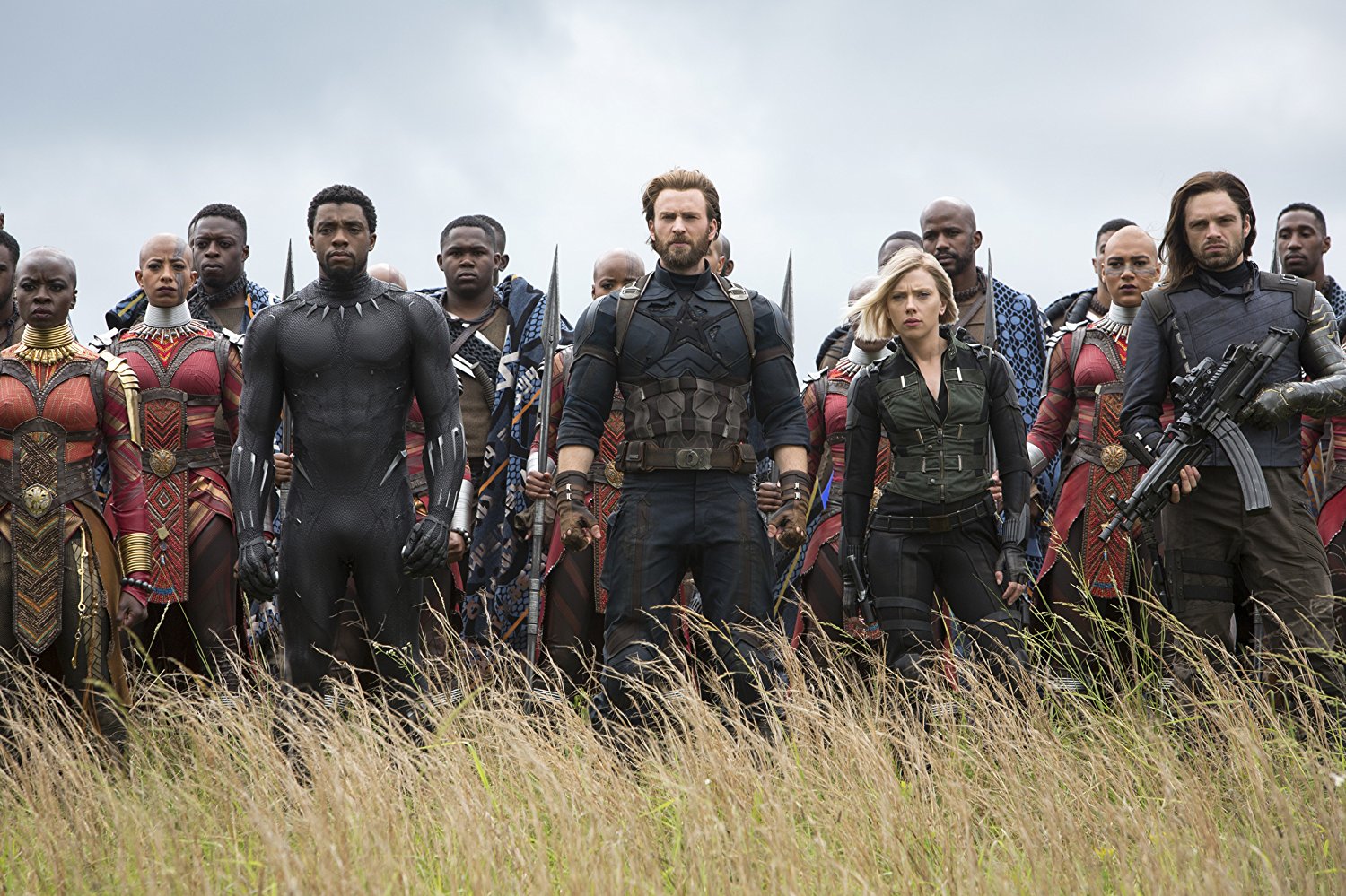
Following the release of Jon Favreau's Iron Man exactly ten years ago, the culmination of plot threads, narrative developments and vast array of characters which have encompassed the Marvel Cinematic Universe since then have all led in the direction of Avengers: Infinity War, the latest gargantuan superhero romp which sees each of the major Marvel characters of the past ten years come together and join forces in order to thwart the oncoming threat of Josh Brolin's (Sicario) ominous Thanos, who vows to collect each of the Infinity Stones, six immensely powerful alien artefacts, in order to bend the universe to his evil and genocidal will. With the hype train well and truly steaming ahead, the anticipation for Infinity War is unprecedented within the realms of superhero cinema, and with a extensively star studded cast list and the directing duo of Anthony and Joe Russo at the helm, whose previous credits of course include Captain America: The Winter Soldier and Civil War, expectations from audiences and critics alike are resoundingly off the charts. Thankfully, what the Russo's have manged to achieve with Infinity War is a staggering, operatic work of spectacle and heartbreaking drama, a film, which on paper had no right to succeed, but has somehow resulted in the most rewarding, magical and downright jaw-dropping Marvel superhero experience in the MCU so far.


With two and a half hours worth of plot to dissect, Infinity War essentially breaks down into a quartet of individual narrative channels, with Earth being the base for the character band lead by Chris Evans' Steve Rogers, space being the battleground for both the Guardians of the Galaxy subplot and Robert Downey Jr.'s Tony Stark own personal quest, and the entire universe being the backdrop for Brolin's Thanos who travels from planet to planet leaving behind a cold, calculated and murderous path as he collects the all-powerful Infinity Stones. With the MCU struggling in the past to effectively conjure up groundbreaking and well-rounded villains, the introduction of Thanos follows in the footsteps of Black Panther's Killmonger by refusing to bow down to simply cannon fodder for superhero stardom and instead is the surprising central character of the piece, with the script superbly managing to highlight the character's genocidal plan with some degree of purpose whilst at the same time introducing flaws and elements of empathy, particularly in the stand-out conversations between himself and Zoe Saldana's Gamora. Of course, with purple CGI muscles, a band of merry followers known as the Black Order and the Infinity Gauntlet in hand, the real power of the character is evidenced to an alarming degree too, with surprising character deaths by his own hand and a dedicated reluctance to fail, resulting in explosive action set pieces which both never seem to outstay their welcome and a include too a perilous sense of threat for everyone involved which the franchise up to now was thoroughly lacking. 


Of course, with so many characters and so little time spared on deep characterisation aside from the film's leading antagonist, particular individuals do become somewhat by-products of a larger endgame, particularly those involved in the drama taking place on Earth and specifically, Wakanda, but with eighteen previous stories worth of backstory and development behind it, Infinity War isn't designed to further character arcs and instead is there to tie up the development already achieved and offer long-awaited fan service for which it undenaibly achieves. Whether it's the banter fuelled dialogue between Tony Stark and Benedict Cumberbatch's Doctor Strange or the egotistical match-up between Chris Hemsworth's Thor and Chris Pratt's Star-Lord, amidst all the grandiose drama, Infinity War still manages to hold onto the razor-sharp comedic puns the franchise is renowned for without ever feeling cheesy or stupid enough to lose its' dramatic edge, and whilst the best moments are undoubtedly in the other-worldly realms in which Downey Jr. and Pratt are present, the film as a whole balances its' monumental premise with staggering ease. Of course, with Infinity War only part one of a much bigger design, there is a resounding sense of payoff not yet being ripely achieved, but with a ground-breaking, melancholic and brazen concluding scene which rips up the cinematic blockbuster rule book completely, the year long wait for the concluding chapter is of course undeniably agonising, but one which if continuing the success of Infinity War, will undoubtedly be an experience to savour.

Overall Score: 8/10

Monday, 23 April 2018

Film Review: The Guernsey Literary and Potato Peel Pie Society

"I'd Like Very Much To Write About You. Your Society..."


Winning the award for most convoluted title of the year so far, Four Weddings and a Funeral director, Mike Newell, returns with The Guernsey Literary and Potato Peel Pie Society, a big screen adaptation of Mary Ann Shaffer and Annie Barrows' 2008 novel of the same name which sees Lily James' (Cinderella) awfully well-spoken but deliriously likeable Julie Ashton, a well-to-do and moderately successful English writer, venture over to post-war Guernsey in order to embed herself into the titular organisation as research for her next literary project. With a cinematic sensibility which reeks of similarity when it comes to moderately successful contemporary Second World War dramas including Their Finest and Churchill, Newell's latest is a ridiculously twee and wickedly harmless romantic drama which revels in its' overt Britishness and an unbelievably predictable and paint-by-numbers screenplay, one which seems to be primarily designed to please audiences admiring the film with a slice of cake and cup of Earl Grey on a light and breezy Sunday afternoon. 


With an opening twenty minutes which introduces James' Ashton, the audience is made privy to her recent literary successes and close separate relationships of professional and personal boundaries with both the attentive, publisher figure of Matthew Goode's (Stoker) Sidney and the charming American soldier, Mark Reynolds, as played by Everybody Wants Some!! highlight, Glen Powell. After receiving a letter from Michiel Huisman's (Game of Thrones) farmer type, Dawsey Adams, under the umbrella of the titular gang of Guernsey residents however, Ashton swaps war torn central London to the rural heart of post occupied Guernsey where she attempts to unravel the mystery of Jessica Brown Findlay's (Black Mirror) missing society founder, Elizabeth McKenna whilst slowly falling for the rough and rugged winner of most attractive cinematic farmer ever in the form of Huisman's Adams. With a supporting band of merry well versed actors including Penelope Wilton (Doctor Who) and Tom Courtenay (45 Years), Newell's movie never alleviates from being anything other than perfectly fine, and whilst at times the predictability weakens the film's final product, the film forever linked with one of the worst titles ever just about ticks over.

Overall Score: 6/10

TV Review: Westworld - Series Two Episode One "Journey Into Night"

"The Stakes Are Real In This Place Now. Real Consequences..."


With the debut season of Westworld being the televisual definition of a slow burner, Johnathan Nolan and Lisa Joy's small-screen re-imagining of Michael Crichton's 1973 cult classic of the same name was still undoubtedly yet another rousing success for HBO, albeit one not quite in the same league of the likes of The Wire, The Sopranos or Game of Thrones as of yet, but with one of the finest hours of television the twentieth century has seen thus far to conclude its' initial ten episode run, it sure has been an agonising wait to comment on the inevitable follow up which finally arrives this week. With the second season under the subheading of "The Door", the premiere sees a wide range of narrative strands which pick up after the aftermath of last season's concluding bloodbath, with returning key characters and new faces alike attempting to bridge the gap between what went wrong and who ultimately is to blame for the collapse of the once apathetic hosts, and with the use of differing timelines, a cornerstone of Westworld's storytelling, being utilised once again to slowly answer the many questions raised from its' stellar first season, it's no surprise that the return of Westworld reminds you how puzzling and utterly captivating the show can be when hitting full stride. 


Opening with a telling and foreboding past discussion between Jeffrey Wright's Arnold and Evan Rachel Wood's once caring and harmless Dolores Abernathy, the action swiftly moves to the implementation of the security team cleanup authorised by Westworld's overarching company, Telos, and the introduction of Gustaf Skarsgård's head of operations, Karl Strand, who after locating Wright in his host persona of Bernard, attempts to seek out what caused the hosts to turn murderous and against their basic and fundamental programming. With two weeks past since the death of Anthony Hopkins' Ford and the loss of total communications since then, the drama switches back and forth between Bernard's recollection of events immediately after the incident and the present day as he both attempts to hide his true identity from his Telos co-workers as well as understand the radical change his own mind is going through. With narrative swings which attempt to highlight the direction of the season ahead, the discovery of a particular foreign animal and a geographical anomaly nod at the expanding nature of the show which even in one episode has moved from the claustrophobic sensibility which was prevalent throughout most of the first series to a fresh eagerness to explore, confirming show-runner's Lisa Joy and Jonathan Nolan's comments regarding audience expectations of a much different Westworld season.


With the inevitable return of Wood's Abernathy and Ed Harris' Man in Black, now revealed to be the older presence of Jimmi Simpson's William, both characters seem to be revelling in the new world that has been created for them, with Abernathy being contaminated with the mind of Wyatt to the extent that the killing of "innocent" guests has now become second nature and her newly found freedom resulting in her declaring her wishes of exploring worlds's outside of her own, hand in hand with James Marsden's Teddy, whilst William's own freedom allows him to revel and shine in a world which has finally hit the dangerous levels he has always desired, with his character tempted once again by the ghost of Ford who tasks him with attempting to locate yet another puzzling destination. With Thandie Newton returning as Maeve, it is her particular subplot which surprisingly lessens the quality of the drama, with her reluctance to kill off Simon Quarterman's agonisingly annoying character in order to locate her lost artificial daughter being the stand out narrative strand which really could be shortened or erased completely, even with Newton's commanding on-screen presence. As far as season premiere's go therefore, Westworld kicks off in tantalising fashion with a wide range of interesting plot points to expand upon, and with a clear new direction in which exploration is key, the quality which concluded the first season has thankfully continued on. 

Overall Score: 8/10

Monday, 16 April 2018

Film Review: Rampage

"Hell Of A Day, Huh? Science Experiments Falling From The Sky..."


Ever so slightly based on the incredibly retro arcade games of the same name which began all the way back in 1986, Brad Peyton (San Andreas) returns to the big screen with Rampage, a CGI ridden reunion with Dwayne "The Rock" Johnson (Jumanji: Welcome to the Jungle) which sees him front and centre of a science experiment gone massively out of control, resulting in gigantic, destructive beasts being let loose in the heart of Chicago. With the arcade game instructing players to destroy everything and anything in their wake whilst famously controlling an oversized gorilla in order to move on to the next level, Peyton's movie features a screenplay which attempts to sew together some form of genuine narrative around such, and with the aid of a seemingly unlimited digital effects budget and the presence of Johnson who always seems to lure in the big bucks, such a feat has somehow been accomplished, albeit one far from a standard of quality for the movie to be considered at all successful. With endless mind-numbing action, a ludicrous and thoroughly stupid narrative, and some ropy examples of both effects and acting alike, Peyton's movie is annoyingly not the fun blockbusting entertainer one may have hoped for, and whilst the movie may not have any issues at the ticket stand, the film seems only to work to a particular audience of which I can proudly admit I bear no chance of being part of.


With the film struggling to hold together a rafter of intertwining plot threads throughout its' overbearing 100 minute runtime, the first half hour attempts to build up the central relationship between Johnson's Davis Okoye, a retired soldier turned primatologist, and the albino gorilla, George, whose presence is managed through a mix of effects and Andy Serkis-inspired motion capture, and with it difficult to think of anything other than Rise of the Planet of the Apes and its' subsequent critically acclaimed sequels when it comes to a cinematic relationship between man and ape, Rampage does manage to hold its' respective bond to a solid and passable degree. Unfortunately for the rest of the movie, come the latter two-thirds when destruction upon destruction is the central focus for a staggeringly dull and unpleasant period of time, all the good work is undone and the film essentially becomes an amalgamation of Pacific Rim, Transformers and all the other bloated works of cinema which don't earn their decision for utter and ultimate destructive chaos. Throw into the mix truly awful performances from the likes of Jake Lacy (Their Finest) and Jeffrey Dean Morgan (Watchmen), with the latter essentially just doing his role of Negan from The Walking Dead, Peyton's mix is a real uninteresting work of nonsense which fails to capture both the enjoyment of the video game in which it derives from and the guilty pleasure sensibility in which it undeniably should have aimed for.

Overall Score: 3/10

Film Review: Truth or Dare

"The Game Is Real. Wherever You Go, Whatever You Do It Will Find You..."


With Jason Blum's Blumhouse Productions obtaining worldwide popularity after the critical success of Jordan Peele's Oscar winning horror, Get Out, last year, it very much seems that the company are willing to tackle anything and everything with a slight horror genre infliction, no matter how weak the subject matter, with a penchant for prioritising quantity over quality as well as gaining a reputation for being the physical manifestation of a paint-by-numbers horror conveyor belt. With Truth or Dare therefore, directed by Jeff Wadlow of Kick-Ass 2 fame after apparently "spitballing" an opening idea with the hierarchy at Blumhouse, it's fair to say that Oscar success is not exactly on the horizon any time soon, with the movie akin more to the likes of Blumhouse disasters such as The Gallows and Sinister 2, and even with a somewhat interesting premise in which our leading horny, social-media addicted and majestically beautiful college "teens" are sucked into a murderous entity's sick game, Truth or Dare fails entirely as a work of horror to the extent that if sold as a comedy, it perhaps would have been much more successful. 


Predictable from the outset, Wadlow's movie begins in terrible and perfunctory fashion, following Lucy Hale's (Pretty Little Liars) Olivia and her merry band of followers including Tyler Poser's (Teen Wolf) Lucas and Violett Beane's (The Flash) Markie as they make there way across the Mexican border in order to experience their final spring break. Cue visit to creepy dwelling, the discovery of satanic rituals and exposition galore, the next sixty minutes moves into a Final Destination territory as we witness each of the friendship group take their turn in the titular game which is forced upon them by an evil entity who breaks free in the form of whacking great smiles, a laughably awful effect which is even coined as "the worst snapchat filter ever" by one of the victims and forces them to adhere to the rules with a punishment of death if anyone rejects to playing. With the jump scares weak, the sense of threat non-existent and one of the biggest cop-out resolutions ever seen on the big-screen, Truth or Dare is unsurprisingly terrible, even with a somewhat likeable leading lady in the form of Hale, but with tacky genre tropes, a rafter of cliches and a dull, overly repetitive narrative, Wadlow's movie is a game really not worth playing.

Overall Score: 3/10