Showing posts with label Psychological Horror. Show all posts

Sunday, 9 June 2019

Film Review: Ma

"What You Did To Me, It Never Goes Away..."


With Blumhouse Productions essentially proclaiming themselves as the second reincarnation of Hammer Horror Studios, the likes of the excellent, Get Out, and the financially successful, Happy Death Day, have allowed the company to pretty much make anything they want with a guaranteed box office reward. Enter Ma, a completely barmy, over-the-top stalker horror which takes hints from pretty much every single B-movie ever, one which sees Octavia Spencer (The Shape of Water, Instant Family) as the titular mother figure, Sue Ann, a lonely veterinary technician who soon begins a middling friendship with town newcomer, Maggie Thompson, as played by rising star, Diane Silvers,(Booksmart) and her own freshly found group of friends who quickly become attracted to Sue Ann's willingness to both provide an abundance of alcohol and a safe place to party. Directed by the steady hand of Tate Taylor, a filmmaker who reunites with Spencer after their work together on the Academy Award winning, The Help, Ma is a solid and well made addition into the Blumhouse repertoire which just happens to have a particularly talented actress in the lead role of a genuinely unnerving and creepy genuine psychopath.  


Bearing a very similar narrative to that of Greta earlier this year, a stalker movie which too featured a prominent and well regarded actor/actress in the lead role of a movie which was undoubtedly too schlocky and mad for mainstream audiences, Ma basically swaps Isabelle Huppert for Spencer and Chloe Grace Moretz for Silvers whilst adding a slightly more audience-friendly filmic texture. Whilst the movie never really evokes any sense of longing dread or threat to our laddish, alcohol and sex obsessed leading group of rebellious teenages, Ma instead balances nicely the absurdity of its' narrative with a hefty streak of black comedy as you giggle your way through a ninety minute picture which allows Spencer to not only chew the scenery, but devour it. With the most menacing on-screen haircut since Javier Bardem in No Country for Old Men and a personality which mixes Annie Wilkes from Misery with Nurse Ratched from One Flew Over the Cuckoo's Nest, Spencer is undoubtedly the star turn within the movie, and with a couple of truly nasty, sadistic and memorable set pieces, Ma is not exactly groundbreaking, but with enough positive elements to make genre fans happy, the latest Blumhouse chapter is cheap, giggle-inducing fun. 

Overall Score: 6/10

Tuesday, 26 March 2019

Film Review: Us

"They Look Exactly Like Us. They Think Like Us. They Know Where We Are. We Need To Move And Keep Moving. They Won't Stop Until They Kill Us..."


With the past two years boosting Jordan Peele into the cinematic stratosphere, the success of his 2017 excellent directorial debut, Get Out, a subsequent Academy Award win, and having a major hand in Spike Lee's equally superb, BlackKklansman, last year means that the American is on what's commonly referred to as a freakin' good roll. With a reinvention of The Twilight Zone set to arrive on the small screen at the beginning of April, first comes Us, Peele's second venture into the world of horror which very much like his critically acclaimed debut, takes the bold decision to weave in and out of varying genres, this time ranging from home invasion thrillers to paranoid conspiracies with a touch of the dark humour which made Get Out so frivolously entertaining. Reuniting both Lupita Nyong'o and Winston Duke after their success together on Ryan Coogler's Black Panther, Peele's movie sees the Wilson family head to a secluded beach house on the coastline of Santa Cruz, California, a trip which brings back haunting memories to Nyong'o's Adelaide after a horrifying incident during her youth. With Adelaide making her concerns known to Duke's Gabriel during the first night of their stay, the family suddenly fall under siege by four intruders who, in typical horror movie fashion, seem to have more in common with them then first meets the eye, and after discovering the life and death situation they now find themselves in, the Wilson family spend the rest of their interrupted holiday attempting to make it out alive. 


With Peele undoubtedly both healthily cineliterate and more importantly, a gigantic horror movie geek, the many successes of Us depend on you actively registering yourself accordingly into the film's tone, one which sort of crosses the boundary between horror and thriller but in a similar vein to Get Out, isn't terrifying in the way of say, Hereditary or The Witch, and instead is more an actively action packed popcorn movie in the same way that A Quiet Place falls more into the monster movie bracket than a straightforward horror. With this in mind, once the relatively straightforward set-up in which the background, key characters and beautiful setting are all aligned into place, the moment we are introduced to the overly ripe doppelgänger version of the Wilson family is when the action truly heats up, providing the audience with a home invasion set piece which rides a fine line between absurdist silliness and creepy psychological horror like a jumped-up hybrid of The Strangers and Invasion of the Body Snatchers, with the latter clearly being referenced due to the uncanny resemblance between the screams made within Peele's movie and the alien duplicates from Philip Kaufman's 1978 remake starring Donald Sutherland. With Peele not afraid in any shape or form whatsoever to bludgeon the audience with overly graphic levels of violence, Us also benefits from the slasher type, B-movie esque traditions of people being killed in very nasty ways indeed, and with a middle act full with clear nods to The Shining and a hint of Adam Wingard's You're Next, the opening hour is undoubtedly a horror movie fan's wet dream. 


With the doppelgänger equivalents of the main cast offering the chance for everyone to have oodles of fun as they attempt to outshine each other in the kooky department, it's fair to say that each of the core members of the Wilson family all have moments to show off their talents, resulting in side characters such as Elizabeth Moss (The Handmaid's Tale) sort of being left aside for the role of easily pruned cannon fodder without any real element of depth. With Nyong'o given the most work to as she walks away winning the award for the year's best hair, her completely twisted performance is superbly entertaining, where even with a rather jarring choice to play her doppelgänger equivalent with a similar oxygen starved tone to that of Eddie Redmayne in Jupiter Ascending, still manages to convince you entirely that although both characters may indeed look the same, they are different entities entirely. Supported by a soon-to-be iconic horror genre score by long term Peele partner, Michael Abels, the soundtrack blends jukebox hits with strange, hypnotic remixes including a hauntingly effective version of "I Got 5 on It" by American hip hop duo, Luniz, and whilst at times the central narrative seems to be putting together almost too many ideas and themes regarding race, religion and identity, Peele's latest is a movie which is still rattling around my brain, and for a movie which is made with this much perfection and care, it's fair to say that Jordan Peele is quickly becoming the most interesting horror auteur of the modern age. 

 Overall Score: 8/10

Tuesday, 5 March 2019

Film Review: Ringu

"This Kind Of Thing... It Doesn't Start By One Person Telling A Story. It's More Like Everyone's Fear Just Takes On A Life Of Its Own..."


Before the mighty highbrows of Hollywood decided to make a quick and easy buck by exploiting the majestic minds of foreign filmmakers with trashy English-speaking reincarnations of particular works, there was a time in which both the Japanese and South Korean horror genres produced some of the most impressive examples of the genre including Dark Water, A Tale of Two Sisters and perhaps most famously, Ringu, the Hideo Nakata directed adaptation of Koji Suzuki 1991 novel of the same name. Brought back to the big screen this week for a special 4K restoration, Nakata's iconic 1998 horror thriller remains to this day a work of chilling paranoia, one which on repeat viewings continues to bewilder and terrify, and a movie which thanks to a superbly crafted digital fix up, looks absolutely brilliant back up on the biggest of cinematic screens. Whilst many will be already aware of the basic set up thanks to the Gore Verbinksi 2002 American remake, Ringu follows Nanako Matsushima's Reiko Asakawa, a small-time journalist who investigates the sudden death of her niece and leads her onto a path regarding a local mystery surrounding a cursed videotape which when watched, gives the watcher seven days to live. 


With it being twenty one years since the film's initial release, in some roundabout way, it is easy to have much more of a fun time admiring the creepy elements at the heart of Nakata's most impressive horror piece after multiple viewings on the small screen, and whilst big screen re-issues always fail to evoke the same sort of impact you gather from the first time a particular piece is lived through, the cinema environment always allows complete investment as you squirm your way through particular iconic set pieces which although you know are coming, are still damn effecting and unbelievably creepy. Whilst Nakata's movie could easily be seen as eighty minutes of backstory as it insidiously sneaks its' way up to a final act in which one of horror's most iconic images is born, the almost complete absence of background music and humour results in an excruciatingly oppressive atmosphere as we follow Reiko through her discovery of the famous video tape and the supernatural terror of Rie Inō's Sadako Yamamura, the Japanese equivalent of Freddy Krueger or Jason Voorhees, just slightly more terrifying and definitely in need of a good old haircut. Whether you appreciate the tenderness of the execution from the Japanese original or the more Westernised, mainstream approach of Verbinski's take, a remake of which is actually rather well done, Ringu remains one of the most interesting and original horror movies of recent times, one which forces you to check your TV twice before switching off the lights and one which supplies you with a fundamental fear of any female with a white dress and long dark hair. 

Overall Score: 9/10 

Friday, 14 September 2018

TV Review: Castle Rock - Series One Episode Ten "Romans"

"Everyone In This Town Has Some Sin Or Regret. Some Cage Of His Own Making..."


For the majority of television series, the real discussion regarding a show's particular merits generally land on the effectiveness of the book-ending episodes, with scrutiny more than most applied to both the opening and concluding chapters, particularly the latter with criticism always leaning towards whether the respective end of a series bows out in a well balanced and universally accepted manner or crashes and burns under the weight of the hours of storytelling which have come before it (see Dexter for such an example). In the case of Castle Rock, Hulu's debut series was undoubtedly a refreshingly interesting, albeit flawed, genre bending haunted house of a series which attempted to pay respect to the mind of horror's most influential contemporary writer whilst offering a glance into a town riddled with nightmares and head scratching mystery. When it came to the show's concluding hour therefore, there was no doubt that theory after theory regarding the potential resolution of the main plot thread involving Bill Skarsgård's The Kid was always going to be one which divided audiences, and whilst Castle Rock finished on a familiarly atmospheric and creepy note with a lot to admire, "Romans" still managed to feel ever so slightly underwhelming considering the potential that was in line to be grasped.  


Picking up on events directly after episode eight, with the previous episode entirely dedicated to revealing The Kid's true nature as Henry Deaver mark one, or maybe not as we'll discuss later, Castle Rock's final chapter focused on Deaver one's willingness to return back to his own reality with the aid of Deaver mark two, whose reluctance to abide is shifted as we see through his eyes potentially more truth to Warden Lacy's opinion regarding mark one's closeness to evil. With the town of Castle Rock crumbling by the hour thanks to shocking character deaths, the rising sound of paranoia and a particularly violent prison escape, all plot threads seemingly accumulate as we follow both Deaver's into the heart of the woods where Deaver mark one's faint flicker of embedded evil seems to manifest in the show's most terrifying jump cut throughout the entire series, and whilst many thought, myself included, that the show would inevitably veer towards a more Hollywood style resolution with Deaver one safely reunited with his true reality, what a kick in the teeth we were left with as the circle closed on seeing Deaver one once again held captive within the heart of Shawshank, this time watched closely by his alternate counterpart whose belief in his prisoner's evil is enough to warrant a lifetime of sin. Ultimately, Deaver's decision may not be the most humane or rewarding from the perspective of the audience but hey, throughout the series we have been warned of Castle Rock's underlying seediness, and with a post credits sequence which suggests further exploration into the mythos and mind of Stephen King, Castle Rock's debut series was a brooding, bewildering and maddening slice of horror which can only get better with time. 

Overall Episode Score: 8/10

Overall Series Score: 7.7/10

Saturday, 8 September 2018

TV Review: Castle Rock - Series One Episode Nine "Henry Deaver"

"God Turned His Back On This Place. Abandoned Us..."


As stated within previous reviews of Hulu's latest success story, the fact that Castle Rock has been proclaimed as an "anthology" series by its' creators in the vein of American Horror Story or True Detective, means that loose ends and unresolved mysteries aren't exactly on the menu once the drama ultimately concludes in the very near future. Thankfully, Castle Rock's penultimate episode just happened to be a twisting, mind-bending and thoroughly enjoyable chapter which put to bed the mystery of Bill Skarsgård's, The Kid, whilst shining a ray of optimism heading into the show's highly anticipated climax next week in which further unresolved plot threads are bound to be tied up in one way or another. With the previous episode fading to black after leaving the audience safe with the knowledge that The Kid and Molly seem to share more in common than meets the eye, "Henry Deaver" decided to dedicate the entire episode to Skarsgård's character in order to develop such a notion as we came to realise The Kid's true nature and place within the town of Castle Rock and the way in which his presence may indeed be key to the evil which has spread across the town since his arrival. 


With an ominous opening speech featuring the familiar line; "people say it wasn't me, it was this place" and further evidence of the seedy history of Castle Rock, the action swiftly moves onto the chance to witness the transformation of Skarsgård's alternate Henry Deaver from a universe in which he seemingly survived childbirth and became an advocate for Alzheimer's treatment and saving cute cats, to the enslaved victim of one man's religious beliefs as he crosses over into "our" dimension in which the young Henry Deaver's disappearance is finally explained. Considering the resolution of the show's central mystery ultimately landed well and truly on the crazier side of things, kudos must go to the screenplay, with the episode's handling of the reveals managing to explain particular plot threads rather well without ever becoming too much or too confusing whilst leaving a heavy amount of the load for the audience to ultimately figure out for themselves. With Skarsgård on absolutely gripping form as the episode's lead and some wacky psychedelic imagery and cinematography, Castle Rock once again proved that when the show is at its' most subversive and bizarre it's undoubtedly at its' best, and whilst certain questions do remain unanswered heading into the finale in the coming days, if the show can be wrapped in a similar fashion to the storytelling in its' penultimate episode, everything should be swell. 

Overall Episode Score: 8/10

Sunday, 2 September 2018

TV Review: Castle Rock - Series One Episode Eight "Past Perfect"

"The Human Mind Is Expressly Designed To Forget Much Of Its' Past Suffering..."


With Castle Rock hitting top stride last week with undoubtedly the best episode of the series so far, an extended hour's worth of television which by the time the series ends will more than likely still remain top of the tree due to the sheer excellence expelled from both its' storytelling and construction, "Past Perfect", the eight episode of the series, reverts back to much more of the classic Castle Rock feel this week, adding more development to particular plot points whilst dialling up the hysterical sensibility canvassing the titular town which resulted in a variety of violent conclusions. With the re-introduction of the two new members of the town after their short appearance earlier on in the series when they are seen being sold the renowned "murder house" by Molly, the episode begins in familiarly wacky fashion by showing the turbulent relationship between Mark Harelik's Gordon and Lauren Bowles' Lilith, a rocky marriage dented by Lilith's unfaithful indiscretion but one still on track as they declare themselves the new owners of Castle Rock's B and B which the two are dedicated to design around the many historical deaths which have occurred within the town throughout the ages.


With an opening segment featuring an abundance of bloody murder which clearly evoked the shot of the dead twins from Stanley Kubrick's The Shining, the inclusion of Gordon reeked heavily of Psycho's Norman Bates and with the added touch of a selection of axes and spooky mannequins, Castle Rock's B and B seemed to be the main place for strict avoidance. With Molly's predictable rescue of Henry resulting in yet more death from her part in the name of the man she clearly loves, Henry's discovery of the now deceased Alan Pangborn resulted in The Kid being blamed for his murder even after an enlightening conversation with the local Police in which Henry was reminded of his school-time nickname of the "Black Death", a title relatively apt considering the timeline of events which have occurred since Henry's return to Castle Rock. With Skarsgård once again stealing the show, his IT related reference regarding his twenty seven year wait for Henry still remains overly ambiguous even when his refusal to age, as evidenced by the huge collection of eerie paintings within the B and B, points heavily towards the supernatural, and with a final, overly ripe five minutes in which Molly's secrets were unveiled and Jackie Torrance's hereditary knack for using an axe made total sense, "Past Perfect" was a mad yet enjoyable Castle Rock chapter. 

Overall Episode Score: 7/10

Sunday, 26 August 2018

TV Review: Castle Rock - Series One Episode Seven "The Queen"

"God Helps Those Who Help Themselves..."


Continuing on from the double dose of cliffhangers which concluded last week's return to form, Castle Rock utilises an hour length episode this week to expand and develop Sissy Spacek's Ruth Deaver, a character whose shadowy spectrum within the background of events so far comes full circle as we come to understand the true nature of her mental infliction which the likes of Alan and Henry have come to deduce as a simply case of Alzheimer's, but one which instead lends itself more into the paranormal and surreal, with particular previous character behaviours within the series all becoming increasingly clear. With "The Queen" undoubtedly the most impressive episode of the series so far in terms of its' beautiful storytelling, sharp pacing and heartbreaking twists and turns, this week's episode was also the most King-esque to be offered up so far, an hours worth of paranormal imagery overshadowed by a haunting, creeping tone and a brooding, ominous soundtrack which clearly echoed a wide range of previous King related projects in which the series has taken heed from. 


With Ruth's ability to travel through the vortex of time itself made abundantly clear, resulting in last week's strangely odd conversation regarding the importance of the missing chess pieces within her house now making total sense, the hour we spend watching Ruth as she traverses the echoes of her past memories is truly beautiful to behold, with the chance to add a deeper layer of characterisation to the likes of Deaver's over-bearing and unstable religious father figure brilliantly orchestrated whilst in the present, the true nature of The Kid seems to unravel itself with a heartbreaking resolution as Ruth attempts to rid herself of her reincarnated demons. With nods to The Shining in which we see Ruth battle through a very Gold Room-esque party full to the rafters with echoes of the dead and an absolutely stunning use of Max Richter's "On the Nature of Daylight" as seen in the likes of the equally beautiful Arrival previously, "The Queen" was a powerfully emotive and undenaibly creepy addition into a series which continues to impress the more it goes on, an episode which bears similarities to "Kiksuya" from Westworld by showing that even when taking the time to focus strictly on one character, such storytelling can be a real beautiful thing to behold. 

Overall Episode Score: 9/10

Sunday, 19 August 2018

TV Review: Castle Rock - Series One Episode Six "Filter"

"I Was There, In The Woods The Night You Disappeared..."


With the major news this week regarding Castle Rock being that the overwhelming success from critics and audiences alike have resulted in a second season being rightly ordered by Hulu, the jury remains out on how exactly all of the many as of yet, unsolved mysteries within the series so far will play out to a conclusion this year or will instead seep into the next batch of episodes set to come in twelve months time. Thankfully, "Filter", the sixth chapter of the series, goes a long way in attempting to break down particular narrative arcs with a bit more push in comparison to last week's slow-burning episode, with a flashier pace and a stand-out musical accompaniment resulting in one of the better episodes of the series so far, one boosted by yet another great central performance from André Holland as his character begins to understand the oddity of his ambiguous past and the origin of the strange, ringing sensation which was picked up on out of the blue during last week's episode, whilst attempting to rekindle his distant relationship with son, Wendell Deaver, as portrayed by Chosen Jacobs, a young actor famous of course for his portrayal of Mike Hanlon in last year's It. 


With most of the action focusing heavily on Deaver's own discovery into his murky and absent memories of youth, particularly in regards to his wanderings into the forest with his adopted father, the discovery of two previous associates of Deaver Sr. results in a surrealist, dream-like epiphany in an attempt to understand the "voice of God" which has supposedly manifested itself within the ringing sensation Henry has been plagued with since a child. With the twirling mix of forestry and incidental piano-based musical cues which wouldn't be astray upon the musical desk of Angelo Badalamenti, Castle Rock does seem to bear more than a fleeting resemblance to Twin Peaks the more it goes on, particularly when Sissy Spacek's Ruth is essentially a contemporary incarnation of Grace Zabriskie's mourning Sarah Palmer, and with the added straight-faced horror elements including the recurring masked spectres haunting Molly's subconscious and The Kid's continual presence within the Deaver household, the show is best when it mixes the supernatural with the sublime. Concluding with arguably the biggest cliffhanger yet, "Filter" offered a vast improvement on last week's chapter with thrilling developments, better pacing and a sudden switch into surrealism which put the series back on track. 

Overall Episode Score: 8/10

Saturday, 11 August 2018

TV Review: Castle Rock - Series One Episode Five "Harvest"

"I Guess Everyone Thinks They Grow Up In The Worst Place On Earth..."


With the concluding act of last week's episode of Castle Rock undoubtedly the best part of the series so far, a startling five minutes or so which expertly blended the dulcet, lucid tones of Roy Orbison with a genuinely unsettling murder spree conducted by Shawshank prison guard, Boyd, a character whose early demise seems to begun a sequence of events which flows into the mid-way mark of the series this week in an episode which puts Skarsgård's "The Kid" slap-bang in the centre of ominous in-comings after he is released into the wilderness of the titular town. Whilst "Harvest" is undoubtedly the weakest episode of the series so far, with its' slower pacing and lack of real plot movement dragging the quality of the storytelling down a couple of notches in comparison to the first four hours of the show, the halfway mark of the series is also strangely the most important, a forty five minutes which seems to continue balancing historic exposition with contemporary action without ever becoming too convoluted in a sub-Westworld sensibility and one which continues the noble art of finishing on a conclusion which leaves you gripped and ready for more. 


With the release of "The Kid" the real talking point of the episode, his psychiatric evaluation and sudden care change into the hands of Molly is paralleled with the ever-growing and literal oncoming storm of wildfire, a supposedly natural phenomenon set to embrace the town of Castle Rock after already taking lives elsewhere, one which seems to ominously foreshadow events yet to come. With the orange glow of the fire raging in the distance as the episode unfolds, kudos indeed goes to cinematographer's Richard Rutkowski and Jeff Greeley, particularly with a brilliantly executed shot in which "The Kid" overlooks Castle Rock as the screams of its' residents intersect with the sombre, Blade Runner 2049-esque backdrop which unfolds in the distance. With Easter Egg of the week undoubtedly handed to Jackie Torrance during her discussion regarding a familial connection to one axe-wielding lunatic, it's a shame therefore that "Harvest" is an episode which just didn't seem to flow as freely as the rest of the series has done so far, but with the second act of the series on its' way, Castle Rock now has to show whether it is a series which ultimately lives up to expectation or indeed falls under the heavy weight of eager King fans who already have their steely knives sharpened. 

Overall Episode Score: 6/10

Saturday, 4 August 2018

TV Review: Castle Rock - Series One Episode Four "The Box"

"There Is A Lot Of History In This Town. Not All Of It Is Good"


With the previous episode of Castle Rock dedicated primarily to the development of Molly Strand and her key involvement in the death of Henry Deaver's father, it seemed wholly necessary that "The Box" would once again revert back to Deaver himself for a forty-five minute episode which included mysterious discoveries, a superb jukebox soundtrack and a concluding set piece which provided evidence for when the show is at its' best, Castle Rock can be a harrowing and powerful work of horror. Beginning with the haunting nightmares of Deaver and his flickering memories of youthful captivity being presented in a superb retro-style sensibility, the eerie wailing of the voice of Tom Waits pierces the mood of the episode to perfection as Deaver's willingness to return home begins to take a toll on Chris Coy's Boyd, the Shawshank whistle-blower regarding the discovery of "The Kid" whose psychological toll regarding the treatment of the many prisoners inside begins to showcase itself early on as we see his character begin to crack under the pressure of seemingly being the only guiding light within the metaphorical hell-house which is Castle Rock's local prison facility. 


With Bill Skarsgård finally having a bit more to do than just stare idly at the camera this time out, his characters' reaction to threats made by the Shawshank lawyer-type figure resulted in a ferociously unsettling reminder of not only Skarsgård's freakishly tall body structure but the fact that amidst the unjust incarceration and unfair treatment. there is still something undeniably evil surrounding his character, even if as of yet, the evidence hasn't surfaced to back up such a claim. With Deaver more adamant than ever to understand they grey area surrounding his disappearance, his discovery of an a-typical murder house reminded everyone that newspaper reels are still the best cinematic form of historical exposition, even if it was more fun to see if any Stephen King-laden Easter Eggs popped up in the many articles which were examined. With the episode mulling towards a sense that it fell justly into the realm of "solid, just not spectacular" with five minutes remaining, how timely it was therefore for a concluding set piece which immediately evoked the murderous rampage in Lynne Ramsay's You Were Never Really Here this year, albeit set to the brilliant backdrop of Roy Orbison's "Crying", a scene which was admired with a gaping dropped jaw and a resounding sense that now Castle Rock is halfway through its' stay, the real action begins now. 

Overall Episode Score: 8/10

Tuesday, 31 July 2018

TV Review: Castle Rock - Series One Episode Three "Local Color"

"The Only Thing People Contemplate In This Town Is Suicide..."


With the opening set-up for the series out of the way, Castle Rock has begun to spread its' wings in the direction of a sprawling narrative which attempts to balance the slow release of historical events with the contemporary mystery surrounding the main characters of the piece thus far, and with the third episode of the series focusing primarily on Melanie Lynskey's Molly Strand, the anxious and paranoid house realtor with a penchant for Carrie-esque telepathic abilities, the horror element of the show was somewhat subsided for around half an hour in place of some much needed character development and interesting developments regarding particular secrets which are slowly and surely being unravelled. With an opening scene which highlighted a young Molly's crucial involvement in the folklore legend of Henry Deaver's disappearance and death of his father, such an event seemed to highlight a strong, seemingly affectionate bond between Molly and Henry, one which ambiguously brought to the table a much different relationship between father and son which ultimately resulted in Molly's decision to turn from empathetic pacifier into merciless, cold killer. 


When the horror elements of the show ultimately rear their ugly head however, Molly's dream sequences involving a guilt-heavy trip into her subconscious alongside a clear reference to the spooky imagery of the 2015 Austrian chiller, Goodnight Mommy, was effectively played, utilising the drawn out, lingering shots the genre is well versed in to dramatic ends, particularly in a concluding shot which undoubtedly sent shivers down the spine. More focus on Molly within the episode also meant more focus on Jackie Torrance, whose close friendship between the two seemingly holds no secrets regarding Molly's affection for the newly returned Henry Deaver, even if her true abilities are still a secret buried within, and with Molly's penchant for social awkwardness ultimately resulting brilliantly in the long-awaited meeting of Deaver and "The Kid", or the now aptly named "Nic Cage", the strange questions and ghostly eyed stare of Skarsgård's character continue to haunt, even when at times it feels necessary for the show to try and push his particular character's exploration a tad further, particularly when it has been nearly three hours of mystery with no real indication of where "The Kid" ultimately fits into the overall narrative, but for an episode primarily dedicated to one character, "Local Color" was an entertaining and surprising forty five minutes of one of my new favourite debut series. For the other one, check out Sharp Objects. 

Overall Episode Score: 7/10

Sunday, 29 July 2018

TV Review: Castle Rock - Series One Episode Two "Habeas Corpus"

"People Say "It Wasn't Me, It Was This Place". They'd Be Right..."


Perhaps the most difficult episode of a debut series is arguably the curtain raiser's successor, an episode which is tasked with following on from plot points freshly spouted in the opening chapter whilst attempting to develop the tone of what that particular series is ultimately heading for in a manner which is intriguing to explore from the point of view of an audience whose journey through the series has only just begun. With Castle Rock's opening hour a delicate, slow-burning creep-fest, the same sensibility can be said for episode two, a shortened forty-five minutes which develops and introduces new characters from the titular town whilst beginning to throw in a wide range of Stephen King flavoured Easter eggs as it slowly builds its' way around the central mystery at the heart of the narrative so far. Whether it be blink and you'll miss them nods to Cujo during the discovery of a past local newspaper headline, or the voice-over of Terry O'Quin's former warden, Dale Lacy, referring to Stand By Me with the discovery of a body on the tracks, episode two of Castle Rock begins to explore the fun the show can have in wetting the appetite of eager King fans dedicated to hunt out every single reference the show decides to flaunt no matter how cryptic and hidden such a nod could be. 


With the opening title card for the episode a mirage of King's written word, one which focuses on famous phrases from Kings' most iconic novels to date, "Habeas Corpus" begins where the previous episode concluded, with Bill Skarsgård's "The Kid" supposed paranormal abilities being exercised within the heart of Shawshank, resulting in Noel Fisher's (Red) prison guard, Dennis, urging Andre Holland's Deaver to obey the wishes of the prison's most recent and ambiguous resident as quickly as possible. With Skarsgård's eyes undoubtedly being the star of the show so far, the devil symbolism which hovers over his character is elevated heavily with the sudden strange death of an inmate and a letter left behind by the former warden whose lengthy incarceration of "The Kid" seems duly justified considering the evil Skarsgård's character seems to hold within. With horror aficionado Jane Levy (Evil Dead, Don't Breathe) being introduced as Jackie Torrance, the familiar surname immediately pricks the ears as does her character's almost encyclopedic knowledge of the town, resulting in a quickfire history lesson regarding Deaver's mysterious disappearance as a child and the unexplained death of his foster parent which still haunts the town in the present day, and whilst at times the episode sacrifices clever writing for the overuse of swearing, episode two of Castle Rock remains a compelling, mysterious horror fan's dream with a splendid soundtrack and committed performers resulting in a second chapter which continues the strength of the show's debut.  

Overall Episode Score: 8/10

Friday, 27 July 2018

TV Review: Castle Rock - Series One Episode One "Severance"

"You've Been Gone Eleven Days. What Happened Out There...?


With 2017 a year packed to the rafters with Stephen King forged entertainment both on the big screen and the small, the tantalising pallet of King-led adaptations which ranged from the outstanding success of It to the little-seen Netflix gem, Gerald's Game, brought with it a timely ultra-relevant reunion with a writer whose works were once again being flouted and ear-marked for Hollywood intervention after a somewhat absent hiatus in which the writer seemed to be vacant from mainstream media and strictly focusing on the written word. With the success of shows such as Netflix's Stranger Things showcasing the influence of the American's bibliography on even contemporary tales today, King's writings have once again been brought back successfully into the limelight, resulting in the creation of Castle Rock, a Hulu original horror series produced by J. J. Abrams (Star Wars - The Force Awakens) and King himself, which attempts to nod to as many King-based stories and characters as possible in a gigantic fan-boy love-in for the die-hard dedicators of the Maine-born writer, alongside a particularly creepy cast who too have their own personal links to previous King endeavours which have serviced their own careers rather well indeed. 


With dark, supernatural stirrings and a range of interesting set-ups, Castle Rock's debut hour bursts with King-styled influences and creepy flavourings as we are introduced to the familiar setting of Shawshank State Penitentiary, albeit without a Tim Robbins or Morgan Freeman in sight, with Castle Rock's portrayal of the prison one much seedier and claustrophobic than anything in Frank Darabont's famous 1994 drama, The Shawshank Redemption. After the discovery of "The Kid" from within the depths of the prison, the skinny-built, pale faced and blood-shot eyed presence of Bill Skarsgård is immediately captivating, if not as genuinely unsettling as the actor's take on Pennywise in last year's It, and with Moonlight's Andre Holland taking on the role as town lawyer, Henry Deaver, his own mysterious background begins to pull the two leading characters of the show in the same direction. With supporting performances from the likes of Sissy Spacek (Carrie) and Scott Glenn (Daredevil), Castle Rock already gleefully wallows in the sheer absurd amount of fundamentally uncertain characters, aided spectacularly by the direction of television stalwart, Michael Uppendahl, (The Walking Dead, Fargo, Legion) who knows when and how to linger the camera just enough to make the audience feel uncomfortable, and with more than enough substance already to engage even the most casual of Stephen King obsessive's, Castle Rock is a show that deserves to be kept an eye on. 

Overall Episode Score: 8/10

Sunday, 17 September 2017

Film Review: mother!

"You Give, And You Give, And You Give. It's Just Never Enough..."


Encapsulating in human form the very definition of divisive, Darren Aronofsky for me is the idealistic, brave and shit-hot filmmaker needed within the midst of summer blockbusters and endless unwarranted sequels in the current climate of cinema, and whilst many understandably lift their nose at the thought of anything with the Brooklyn born movie-maker's recognisable touch, there is an unparalleled level of talent within a man who in my eyes rarely puts a foot wrong. Whether it be the depraved, nihilistic portrayal of addiction within Requiem for a Dream, the depiction of regret and sorrow within The Wrestler, or indeed the Argento inspired ripeness of Black Swan, Aronofsky holds no standards for a crowd-pleasing cop-outs and that alone has resulted in widespread appeal for his movies, particularly mother!, Aronofsky's latest feature which for all its' lack of publicity and reportedly inflammatory subject matter still manages to secure a wide release across the UK. Challenging, subversive, oppressive and surreal, Aronofsky's latest transcends the realm of cinema itself and leaves you in a state of prolonged shock as soon as the final credits roll, and whilst many are guaranteed to loathe the sadistic and ripe arty nature of the film's final product, mother! is an experience of an ilk similar to the likes of Funny Games and Kill List by being a film so terribly haunting and tough, the execution of such simply has to be rapturously applauded. 


Set wholly within the confines of the winding home of Jennifer Lawrence's "mother" and Javier Bardem's writer's block ridden "him", Aronofsky's narrative twists between home invasion horror, jet-black comedy, Lynch-style surrealism and a Dogville-style societal commentary, and whilst the underlying story is undoubtedly based upon writings drawn from Christianity and the sacred texts within the Bible, the twisted nature of Aronofsky's storytelling offers much more than just one simple way to manoeuver through the ambiguity and the three-act structure, with each act after the next increasing in tension and shock value as the movie progresses through to its' ultimate conclusion. With the camera solely fixed on the subjective view of Lawrence, with all but a few minor shots either directly focusing on her face or over her shoulder, the Oscar winning actresses performance is absolutely mesmerising, conveying a rafter of facial expressions and emotions as the narrative forces her to compliment the downward spiral of horror which transcends upon the screen and a performance which evoked the spirit of Nicole Kidman in Lars Von Trier's Dogville and Mia Farrow's iconic role in Roman Polanski's Rosemary's Baby, a movie of which directly influences mother! in it's rollercoaster ride of a final act, one which comes extremely close to dive bombing the movie altogether in its' sheer jaw-dropping extravagance. 


With Bardem on usual form as the somewhat ciphered, unknown quantity, and both Ed Harris and Michelle Pfeiffer reminding everyone of their raw and unquestionable talent, Aronofsky throws the remainder of his cast around and around in order to suit his narrative endgame, with jarring inclusions from the likes of Domhnall Gleeson and Kristen Wiig seeming so surreal it almost cripples the way in which you as a viewer should be embracing the movie, particularly in regard to its' ever-wandering tone. If you head to in to a screening of mother! wanting a jump-scare ridden horror, you are bound to leave extremely disappointed, and whilst there is undoubtedly elements of genre-literate exploitation aplenty, with the film evoking everything from the likes of Twin Peaks: Fire Walk With Me in terms of its' hateful depiction of the human existence to the social commentary extremity evident within Ruggero Deodato's Cannibal Holocaust, Aronofsky's latest is not a film to be enjoyed, instead it is the type of movie you digest, mull over and decide to what to make of it after three glasses of whisky and a trip to a puppy farm to combat the oppressive shock your mind is layered in after exiting the auditorium. mother! gave me nightmares, and not many films manage to bury that deep within the confines of my psyche but it goes to show how much of an astonishing, messed-up cinematic achievement Aronofsky has managed to create in a cinematic environment when risks are so rarely eaten up. 

Overall Score: 9/10

Monday, 10 July 2017

Film Review: It Comes at Night

"You Can't Trust Anyone But Family..."


Learning his cinematic craft on the set of not one, nor two but three Terrence Malick productions including the staggeringly beautiful The Tree of Life, American filmmaker Trey Edward Shults follows on from his critically acclaimed debut, Krisha, this week with It Comes at Night, a psychological horror movie which features The Gift's Joel Edgerton in the leading role and a movie which seems to have somewhat drifted under the propaganda radar, resulting in the first time in a while in which I head into a movie having no idea or preconceptions about what I am about to witness on-screen. Whether this is an element which ultimately damages or aids a particular release, there is a sense of thrilling ambiguity being unaware of a film's direction, particularly in regards to a horror movie, and what we have with It Comes at Night is a staggeringly bleak, yet wholly effective white-knuckle thriller, one which uses its' minimalist surroundings to outstanding use and a movie which perfectly showcases the acting talents of one Joel Edgerton, an actor who seems to have found his perfect hunting ground in order to grind out the best he has to offer upon the big screen.


Set in the aftermath of an unknown, ambiguous, worldwide pandemic, It Comes at Night focuses primarily on Edgerton's Paul, the husband and father figure of a survivalist family destined to keep safe in the midst of the darkened wilderness who are suddenly forced to surrender their safety for the greater good when they come across another trio of survivors who too are desperate for survival. With a narrative edge as bleak and nihilistic as films such as The Road and even at times, The Mist, It Comes at Night is a effective mix of psychological and body horror, one which echoes a wide range of previous films from 28 Days Later to last year's The Girl With All the Gifts, particularly in regards to its' underlying notion of disease and contagion, and with cinematography which makes the likes of Seven look like a Disney movie, the jet black colour pallet adds to the ghostly air of uncertainty which embraces the viewer and leaves the audience with a sense of never really knowing where the tension is directly heading. Whilst the violence and dastardly dark plot turns result in the movie not exactly being for all audiences, for someone who loved the likes of The Witch and The Neon Demon recently, It Comes at Night is independent horror at it's most effective.

Overall Score: 8/10

Saturday, 29 April 2017

Catch-Up Film Review: Rings

 "I Keep Thinking About This Story. There's This Video That Kills You. Seven Days After You Watch It..."


Blah, blah, blah. Whilst there is nothing new in the notion of American remakes, the category in which really grinds my gears is the one filled to the rim with English-speaking "re-imaginings" of foreign language horror movies, with absolute classics in the form of A Tale of Two Sisters, Let The Right One In and Ju-on: The Grudge all being mashed up and reproduced in the flight of gaining a quick yet tainted blood-stained buck on the account of the butchery which tends to happen when foreign movies are translated onto an audience which is primarily English speaking. Of the many horror franchises which has roots well and truly set in the minds of more intelligent filmmakers, Rings, directed by Spanish filmmaker F. Javier Gutiérrez, is yet another entry into the Ringu canon which began all the way back in 1998 with Hideo Nakata's terrifying cinematic take on the Koji Suzuki novel of the same name, and whilst the third American entry seems to begin with an element of interest, Rings unfortunately, yet unsurprisingly, ends up being yet another wasted opportunity, with it not only coming across as incredibly offensive to horror fans across the world, effectively spits on the shadow of its' former self with its' sheer and utter dreadfulness.


With a leading star who carries as much charisma and interest as an ASDA bag for life, Rings begins with a narrative which looks as if it is set to offer some new light into the world of spooky water-covered teenagers with long black hair by delving into a somewhat underground network of shady college preps who view the infamous killer video tape as a reason to get up in the morning, using the threat of Samara as a messed up type of adrenaline rush alongside a basis for Johnny Galecki's character's thesis on the mystery of her existence. Whilst this interesting notion covers roughly the first fifteen minutes of the movie, the following 90 minutes is essentially a cheap re-telling of a story in which every single person in the cinematic world is now bored to death with, trading real elements of threat and suspense with cheesy dialogue and awful jump scares which rely on the power of the cinema's sound system in order to actually come across as worthwhile. News alert; they don't. Ending on a supposed twist which offers up the idea that the franchise is set to continue into the future, Rings is the type of cinematic face-palm which you really struggle to understand its' existence. If you're thinking of buying it on DVD, don't. 

Overall Score: 3/10

Monday, 20 March 2017

Film Review: Get Out

"I Want Your Eyes, Man, I Want Those Things You See Through..."


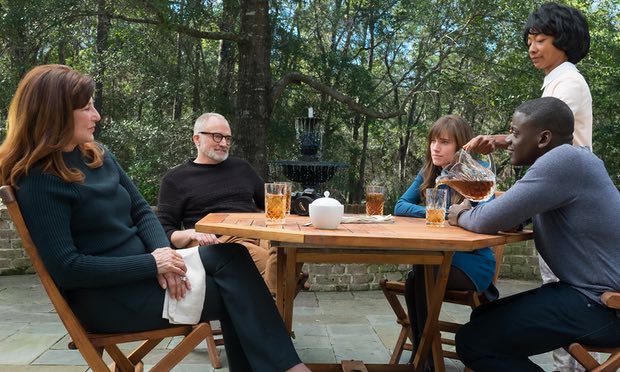
Following on from the complete and utter nonsense spouted from the mouth of Samuel L. Jackson this month regarding the use of British black actors in lead roles within predominantly American based cinematic projects, first-time director Jordan Peele attempts to divert attention from such utter drivel this week by treating us to the release of Get Out, a film of which Mr. Jackson's ill-judged comments were heavily directed towards. If being judged entirely on the merit of its' trailers, Peele's directorial debut presented itself as an entirely bonkers and mouthwateringly interesting horror, one which seemed to come across as the most surreal and OTT horror movie of the past few years. Starring Daniel Kaluuya in the leading role, an actor arguably best known for his work on Charlie Brooker's Black Mirror and Denis Villeneuve's excellent Sicario in 2015, Get Out is as wacky and relentless as it's many formats of advertisement made it out to be, a brilliantly shocking and wholly entertaining work of genre-twisting mayhem which makes you jump, laugh and squelch at the utter ripeness of its' undeniable lunacy.


Unnerved by the potential racial tensions of meeting his girlfriend's family for the first time, Kaluuya's Chris is swiftly placed at the heart of a Stepford Wives-esque community who seem a tad bit too interested in his own individual well-being and presence amidst a minority of fellow black residents who seem weirder and weirder with every passing glance. What follows for the majority of the movie is a hypnotic, both metaphorical and literal, tale of Twilight Zone magnitude weirdness which evokes a wide range of classic horror tales from John Carpenter's Halloween to the more recent splatter-fest in the form of Adam Wingard's You're Next. Mixing in a variety of effectively timed jump-scares amidst an underlying element of rib-tickling comedy, Peele's debut is an outstanding addition to a supposedly tired format, with ripe as rainbow performances form most of its' cast evoking a chilling sensibility which arches towards a Wicker Man-esque narrative, Get Out is the type of movie destined for classic cult status. The best horror movie of the year so far and by a distance one of the most interesting of recent years, Get Out is the type of movie fans of classic horror movies pray and hope for.

Overall Score: 8/10

Saturday, 25 February 2017

Film Review: A Cure For Wellness

"Do You Know What The Cure For The Human Condition Is? Disease. Because That's The Only Way One Could Hope For A Cure..."


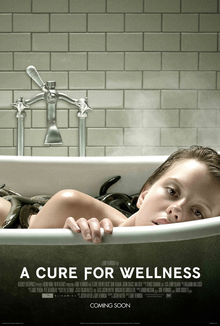
Rather annoyingly, the use of the term "visionary" is something of which is pushed around so often in the current cinematic climate that to be regarded as such is somewhat of a negative down-stroke. With the likes of Zack Snyder and now Gore Verbinski proclaiming themselves as visionaries of modern cinema, directors who have released such "classics" such as Sucker Punch and Mouse Hunt respectively, the term has now officially become defunct and saved only for those who are deserved of the term, you know, like directors who have actually made films of some worth. Anyhow, Verbinski returns this year with the 18 rated A Cure For Wellness, a film which harks back to everything from The Ninth Configuration to Lars von Trier's Riget, and a picture which can only be regarded as one of the most boring, misjudged and overlong works of horror I can remember within the remits of recent history. Whilst many have condoned A Cure For Wellness as simply nothing more than a Shutter Island rip-off, Verbinski's latest makes Scorsese's OTT two hours of mania look like a modern masterpiece, with it more likely to send you into a deep coma of confusion than inflict any real tangible sense of threat throughout a barnstorming length of two and a half hours. 


After dropping a job-losing clunker and subsequently threatened with criminal prosecution, egotistic Wall Street flunky Lockhart, played by The Place Beyond the Pines' Dane DeHaan, is sent to a mysterious health care centre in the heart of the Swiss Alps in order to retrieve a AWOL financial executive who has supposedly regressed into a complete and utter basket case and refuses to return to the US of A in order to complete a huge financial deal. Cue creepy looking patients, a mindless and ridiculously overcooked narrative and a concluding feeling of watching a movie which not only could lose at least an hour of its' running time but one in which nothing actually happens, A Cure for Wellness suffers primarily from a runtime which is unbearable to say the least, and although Verbinski is renowned for an array of miscalculated movie lengths, with Pirates of the Caribbean 3 being a prime example, A Cure for Wellness is his pièce de résistance in terms of runtime malpractice. Whilst Jason Isaacs does do the best with what he's given in the cliched "foreign stranger" role, the movie can't escape the problems of its' silliness, particularly within scenes of unnecessary violence including a cheesy R-rated dentist appointment and an attempted rape scene which borders on the outskirts of being a utter cringe-inflicted misstep. If you wish to see the type of movie A Cure for Wellness is so obviously attempting to be, seek out something like Shutter Island or The Shining instead, relieving you of the utter tedium of delving into a horror which is neither horrific or interesting. A cure for wellness? A cure for sleep deprivation. 

Overall Score: 3/10

Sunday, 22 January 2017

Film Review: Split

 "Let Us Show Them What We Can Do. Let Us Show Them How Powerful We Can Be..."


If there is one thing to be said about M. Night Shyamalan's career in the business of movie-making so far, to say it was one of the most diverse and critically haphazard back catalogues of all time wouldn't exactly be a raging overstatement. Whilst films such as The Sixth Sense and Unbreakable continue to be Shyamalan's support beam for his seemingly imperishable reputation, people tend to forget the cinematic bombs such as After Earth, The Last Airbender and Lady in the Water, films which not only are regarded as utter, utter stinkers but films of which Shyamalan tends not to remind people of their existence in fear of not actually being allowed to be behind the camera ever again in Hollywood. With Split, Shyamalan seems to be on similar and overtly familiar territory, with a creepy, psychological premise at the core of the film's screenplay and a final twist which is both surprising and overtly on-the-nose in terms of its' utter silliness but one which too will leave the lay cinematic audience scratching their heads.


Featuring a scenery chewing central performance from James McAvoy, one which echoes the full-blown madness of his role in the black-hole darkness of Filth, Shyamalan's latest is undeniably a welcome return to some sort of form, with the obvious b-movie silliness actually resorting in a movie which is much more fun in terms of its' exaggerated ripeness than one might have first expected, due mainly to the headline performance of McAvoy, whilst the go-to actress for creepy leading ladies in recent times, Anya Taylor-Joy, continues to impress after continuing on from her stand-out roles in both The Witch and Morgan. Of course, now the un-embargoed reveal of the very final act of Split is one of which will baffle those unaware of Shyamalan's previous work, yet for those privy to a particular early Shyamalan picture, the concluding seconds bring with it a surprising sense of wanting to pat Shyamalan on the back for having the audacity to attempt it, let alone actually film it. 

Overall Score: 7/10

Wednesday, 13 July 2016

Film Review: The Neon Demon

"Beauty Isn't Everything. It's The Only Thing..."


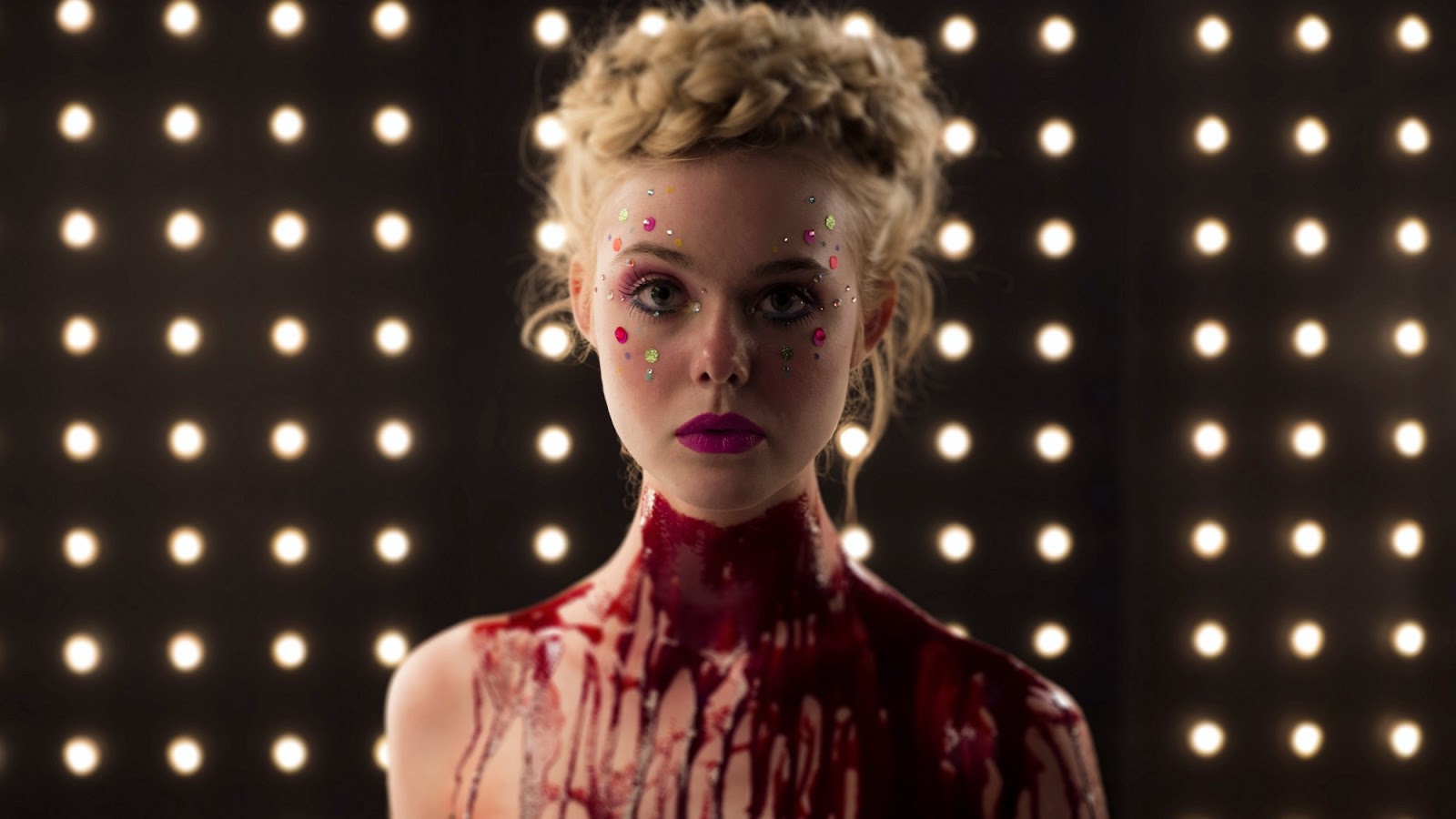
Much like marmite, the conservative party and battenburg cake, Nicolas Winding Refn has established himself as the leading figure of being someone you either love or someone you really, really hate, where although films such as Bronson and Drive have put Refn on the Hollywood map in recent years, his last venture in the form of Only God Forgives was something that myself and many others believed to be his most divisive work yet. What side was I on I hear you ask? The one which thought that Refn had really lost the plot, with Only God Forgives being an ultra-violent mess from start to finish. Now, Refn is back with The Neon Demon, a neo-noir horror based upon the dark side of the fashion industry starring Elle Fanning as the 16 year old Jesse, the blue eyed deer in the headlights, desperate for her time in the spotlight after recently moving to Los Angeles, who realises the only way to make money is to make the most of her stunning, natural beauty. Que necrophilia, cannibalism, stunning visuals and a Oscar worthy score by Refn regular Cliff Martinez and The Neon Demon is indeed a complete work of art, a work of art like Only God Forgives, is bound to split audiences right down the middle. What side am I on this time? The positive one. And some. 


Pulling in riffs from a wide range of famous movies from the past, The Neon Demon prides itself on featuring echoes of Black Swan, Irreversible, Carrie, and even more deliciously, the movies of David Lynch, particularly that of Inland Empire and Mulholland Drive, with both featuring the notion that sometimes imagery and visuals can be so overpowering and hypnotic that the sense of ambiguity such films create can be put to one side with a strange sense of rational compromise. The same can be said of The Neon Demon, a film so hell bent on blasting you with out of this world colours, visuals, and imagery that you have to think twice to comprehend that Refn is indeed colour blind. That's right, the director of the best looking film of 2016 can't see the beauty he has created. Ironic really, in a sad sense, yet there is no denying The Neon Demon is indeed a spectrum of artful amazingness, something you wouldn't really think of in regards to a horror movie in the traditional sense, yet the inclusion of obvious shock-inducing exploitation goodness such as THAT scene and things going a bit stabby stabby come the final act means Refn has created a film which stays with you for days on end. The Neon Demon will indeed divide audiences yet for my money, it's up there with Drive, making it one of the best, and most surprising, films of the year so far. 

Overall Score: 9/10