Showing posts with label Warner Bros. Show all posts

Tuesday, 5 November 2019

Film Review: Doctor Sleep

"When I Was A Kid, There Was A Place, A Dark Place. They Closed It Down, And Let It Rot. But The Things That Live There, They Come Back..."


With Hollywood at a particular period in cinematic history where every single word written by the steady hand of Stephen King is set for some form of live action adaptation, with the release of Pet Sematary and It: Chapter Two alone this year resulting in very successful box office returns, the release of Doctor Sleep this week reminds that the best King adaptation in the form of Stanley Kubrick's horror masterpiece, The Shining, has yet to be truly tested even after nearly forty years. With King's original novel undoubtedly one of his most iconic and well regarded by literary readers, the fear of any sequel to the tale of the Torrance's and the Overlook Hotel were first raised when Doctor Sleep was published in 2013, and whilst King's novel passed the time nicely during my university years with some interesting ideas and charming call backs to its' predecessor, the narrative never held the same sense of supernatural wonder that the 1977 original novel had in spades. Cue the big screen adaptation therefore, one directed by the overly impressive skills of horror aficionado, Mike Flanagan, the mind behind both Netflix's The Haunting of Hill House series and of course, Stephen King's own, Gerald's Game, and what we have is a movie which succeeds in paying both homage to Kubrick's classic horror and staying as faithful to the novel of Doctor Sleep as humanly practicable, a decision which ultimately simultaneously both hinders and supports Flanagan's latest big screen project. 


With Kubrick's adaptation of The Shining only carrying a slight sense of faithfulness to the source material in the first place, Flanagan's movie directly follows events which take place in the 1980 horror classic after a decision was made that most people heading into Doctor Sleep would have probably seen Kubrick's portrayal of events rather than read the original text, and with a central narrative which follows a now alcoholic and middle-aged Danny Torrance (Ewan McGregor) and his discovery of both others who "shine" and Rebecca Ferguson's (Mission Impossible: Fallout) band of vampire-esque killers who feed off the "steam" of those inflicted with the power of the shining, Flanagan's movie for those who would not have read the novel is a substantial diversion from the confines of the Overlook Hotel. Blending mystery, scenes of downright horrific violence and a really beautiful genre aesthetic, Doctor Sleep does have elements of real intrigue, even for someone who has read the source material, but at a staggering two and a half hours, the movie doesn't half drag at times, particularly when we are exposed to utterly blasphemic reconstructions of scenes from Kubrick's original movie and a tendency to focus on particular characters who suffer from a unhealthy balance of being both uninteresting and underwritten. The Shining it is not, but as a direct adaptation of a middling King novel, Flanagan's movie is good enough but fails to ignite the sense of haunting wonder its' predecessor continues to evoke even after nearly forty years. 

Overall Score: 6/10

Sunday, 6 October 2019

Film Review: Joker

"I Used To Think My Life Was A Tragedy, But Now I Realise, It's A Comedy..."


Suitably utilising the effects of the famous saying, "there is no such thing as bad publicity", War Dogs and The Hangover director, Todd Phillips, returns to cinemas this week with Joker, a movie which brings with it an a-typical example of contemporary social media carnage involving a movie which manages to have the official double stamp of both early critical plaudits and volcanic audience expectation. Benefitting from early calls of being given "masterpiece" status after its' debut at this year's Venice International Film Festival back in late August, Phillips' movie famously has been through sensational, La La Land-esque levels of backlash from many across the globe even before any form of general release, with particular avenues of spectators arguing the negative impact the film may have on the wider populous due to its' oppressive and disturbing themes, a particularly nonsensical argument which harks back to the age-old sociological theory that violent media turns the lay person into sadistic, sociopathic serial killers. Putting such nonsense aside, Joker as a film is a surprisingly nihilistic and hauntingly effective character study, a movie which is designed with such freedom and disregard for the opinions of the masses that for it to be classed as just another "comic book movie" would be a disservice of the highest order, and in an era where the Marvel Cinematic Universe is clearly the holy bible of what audiences have come to expect from superhero movies, Joker is a satanic, incendiary work of madness which is by far the most original and boldly constructed so called "mainstream" movie in many a good year. 

With the influences on Phillips' movie wide ranging to say the least, the movie of course predominantly relies on its' central character's source material, particularly the grittier end of the comic book world including Alan Moore's critically lauded graphic novel, The Killing Joke, which also served as a basis for Christopher Nolan's and Heath Ledger's depiction of the character within The Dark Knight, and whilst Ledger's approach to the infamous villain was the darkest and most complex incarnation cinema audiences had seen at the time, the masterstroke casting of the brilliant Joaquin Phoenix (The Master) means that in the form of Arthur Fleck, the world bears witness to a Joker who takes the term, "sociopath", to an entire new level. With many already comparing Phillips' movie to the sheer isolation and hopelessness of Scorsese's Taxi Driver, the smokey, industrial wasteland of an early 1980's era Gotham means that tonally, Joker does owe Scorsese's classic a huge amount of debt, with the central narrative of Phillips' movie closely mirroring Paul Schrader's original script as we see Phoenix's Fleck slowly embrace the hatefulness and disillusioned hatred he has for his own world by being constantly subjected to violence, abuse and high profile ridicule at the hand of Robert De Niro's (Goodfellas) Murray Franklin, a popular talk-show host who in the eyes of Fleck, embodies everything that is wrong with a society which is determined to keep the rich intact and the poor struggling to survive. 


Whilst the movie does of course have an overarching social commentary regarding issues of capitalism and societal breakdown, albeit in a way which could have done with a slightly more subtle approach, Phillips rightly is more interested in using his chance to utilise the breathtaking acting skills of Phoenix as much as possible, an actor who in return offers up the most dedicated and physical performance to be seen this year as he beefs up his character with a skeletal physicality and an interesting condition which sees him laugh hysterically for extended periods without the ability to prevent himself from doing so. With another influence being Lynne Ramsay's You Were Never Really Here, an equally stark and stylish work of brilliance with Phoenix on top form, the similarities involving each film's leading character's relationship with their mother, their relationship with the outside world and their relationship with their own personal mental health issues does offer up an interesting double feature, and whilst Joker is of course the more mainstream of the two movies, the darkness and violent nature at the heart of it never gives away for the sake of appeasing happily paying audiences, resulting in jaw-dropping explosions of violence which reminded me of Drive and the infamous curb-stomp scene from American History X, and as the movie progresses into its' final act in which the narrative plays into a crescendo of Fight Club meets V for Vendetta, all the subplots in the two hours previous come to a mightily radical end, one which physically made me jolt at the bravery of a film which stuck to its' guns completely and became the better for it. Comedic and heartwarming Joker is not, and in an era when filmmakers need to break ground in the comic book genre to truly stand out among the money making behemoth's, Phillips has created the best DC movie since The Dark Knight and the most radical interpretation of any comic book character I can remember, and if you can stomach the violence and handle the sheer darkness at the heart of it, Joker is mightily impressive and rewarding in equal measure.

Overall Score: 9/10

Wednesday, 25 September 2019

Film Review: The Kitchen

"Times Change. You Do What You Got To Do. Some Hits. For Money, You Survive..."


Based on the comic book series of the same name published by Vertigo Comics, an offshoot of DC Comics which was intended to promote graphic comics suitable for a more "adult" audience, The Kitchen is both the big screen adaptation of the original series created by both Ollie Masters and Ming Doyle, and the directorial debut of Andrea Berloff, an American filmmaker best known so far for writing credits on the excellent, Straight Outta Compton, and the not-so excellent, Jamie Foxx starring, Sleepless. Coined by the film's production company as being an "edgy and subversive" addition into the crime genre, Berloff's movie follows a very Widows inflicted central narrative, one which sees our three central female characters attempt to pick up the crime-inflicted mantle of their now incarcerated husbands in order to stay afloat in the late 1970's society in which the notion of the male breadwinner was very much still at the forefront of the nuclear family. Whilst I am all for a gender-bendered approach to a genre which is still reeling in the shadow of The Godfather and Goodfellas, Berloff's movie is the type of big screen turkey which almost falls into the category of so bad it's good, an awfully mis-handled raspberry of a movie which fails on every single fundamental level of how to actually make a working movie, a high profile example of a director who seems to have been given a big-budget project slightly too soon and has ultimately crippled under the pressure with dire and laughably bad results. 


Pushed as a serious crime drama, The Kitchen attempts to sell the idea of three women with little to no experience of the criminal underworld suddenly strong-arming the entire Irish crime syndicate within the heart of Hell's Kitchen, New York, in order to keep afloat their own individual lives after relying on their male counterparts for so long. Whilst the whole notion of fiction is to imagine a world away from our own, one of the primary issues of Berloff's movie is undoubtedly the cast choices, with both Melissa McCarthy (Spy) and Tiffany Haddish (Night School), actors both primarily known for cutting their acting chops in comedy, whose move into a picture which requires a certain level of dramatic expressionism not exactly paying off, with McCarthy once again failing to provide me with evidence that she can actually play anyone other then herself and Haddish laughably terrible as she attempts to evoke some sense of believability to her paper thin character. Whilst the usually reliable presence of Elizabeth Moss (Us) is also woefully mishandled, with her wildly inconsistent character mute for half of the movie and then seemingly drunk for the other half, the whole sensibility of The Kitchen feels like a half-baked Saturday Night Live sketch, one written by a first year university undergraduate with a pure hatred for the male sex and one directed by someone who simply cannot get to grips with the subject matter whatsoever, and whilst Berloff's movie did make me laugh out loud on occasion due to how simply awful the whole thing is, The Kitchen is an absolute stinker of a movie and a high profile example of how not to make a comic book adaptation.  

Overall Score: 3/10

Saturday, 7 September 2019

Film Review: The Informer

"The General Is One Of The Major Importers Of Fentanyl. We're Going After Him..."


If ever there was a movie which had me sold on the trailer alone, The Informer is exactly that. Presented as a prison crime thriller produced by the gritty minds behind the superb one-two of Denis Villeneuve's, Sicario, and the action series of the decade, John Wick, The Informer, at least on a production level, definitely had a lot going for it heading in. Helmed by Italian filmmaker, Andrea Di Stefano, an actor turned director responsible so far for the little seen, Escobar: Paradise Lost, starring Benicio Del Toro, and based upon the 2009 novel, Three Seconds, from the Swedish crime-writing team of Anders Roslund and Borg Hellström, The Informer is an English speaking adaptation which sees Joel Kinnaman (Suicide Squad, Altered Carbon) as Pete Koslow, a former decorated war veteran turned criminal who escapes the confines of prison after making a deal with Rosamund Pike's (Gone Girl) FBI Handler as part of a complicated plot to bring down the renowned Polish drug baron known as "The General". 


With a tonal sensibility which includes as many laughs as a night time funeral, The Informer presents itself upon the darker range of the thriller genre, harbouring a rather depressing nihilistic viewpoint pretty much throughout in a similar vein to the likes of Sicario, albeit a movie without the technical nuance or strange, ambiguous mystery which made the Villeneuve original so damn good. Instead, the central plot involving Koslow, his family and his role within the war between the cops and the drug dealers is too cliched and tacky to come across as anything other than mechanical, resulting in a rather aggravating sense of patting myself on the back when particular plot twists and discoveries brought themselves to the forefront of the plot without any real sense of shock or enjoyment as the entire audience could see such developments walking into the movie. Whilst Kinnaman is his usually reliable self as he plays the "wounded soldier" role which his recent past performances have all seemed to have based upon, the muddled and shallow plot doesn't allow for anyone else to particularly shine, with the likes of Pike and Clive Owen resorting to bit-part players within a plot that really could have done with a bit more umph, and whilst expectations may have been unjustifiably high heading in, The Informer is well made but boy is it bland. 

Overall Score: 5/10

Tuesday, 7 May 2019

Film Review: The Curse of La Llorona

"Have They Heard Her Crying? Have They Felt The Sting Of Her Tears? They Will, And She Will Come For Them..."


Winning the award for most unpronounceable title of the year so far, The Conjuring universe returns once again to the big screen like a distressed, lost puppy eager for ticket sales with The Curse of La Llorona, a ridiculously silly and scare-free cinematic cliche which attempts to build on the Mexican folklore of the same name. Produced by franchise stalwart, James Wan, and directed by American filmmaker, Michael Chaves, in his big screen debut after a succession of short films, La Llorona sees the usually reliable Linda Cardellini (Green Book) as Mexican-born social care worker, Anna, who after investigating the disappearance of a past client's two young children, falls under the murderous spell of the titular "weeping woman", a CGI heavy, poorly designed spectre who soon takes a liking to her two young children still reeling from the death of their father. Whilst audiences and critics alike are now totally clued up in regards to what to expect from a franchise as unreliable and uninspiring as the one in which La Llorona sits, one has to take some form of nostalgia by remembering just how darn good both The Conjuring and The Conjuring Two actually were, but with the likes of Annabelle and The Nun clearly showing how such a series may have stretched a point slightly too far, Chaves' debut unsurprisingly nestles nicely with the latter as it fails to ignite any sense of intrigue whatsoever.  


Beginning in familiar horror movie fashion by attempting to rationalise the decision behind the main antagonist's desire for death, La Llorona soons falls into the trap of offering up cliche after cliche as the primary threat is harnessed through endless jump scares, a tactic of which doesn't exactly pay off as such well versed genre tropes come across as neither surprising or in any way scary, resulting in heavy sighs every time the sound system in the cinema gets a good old test run as we are mistreated to cranked up violins or the endless wailing of our titular ghostie. With the film falling into the Sinister trap by showing way too much way too soon in regards to the evil at the heart of the drama come the hour mark, the film also soon loses all sense of originality completely, resorting to repetitive, dull and thoroughly uninteresting set pieces which all seem to be designed in order to justify the ninety minute runtime, but with no sense of threat or dread at all as it plays towards a very middling and family friendly conclusion, the scariest part of The Curse of La Llorona is that such a film was actually made in the first place. 

Overall Score: 4/10

Thursday, 14 February 2019

Film Review: The Lego Movie 2: The Second Part

"Emmet, You've Gotta Stop Pretending Everything Is Awesome. It Isn't..."


When it comes to 2014's The Lego Movie, it is fair to say in retrospect that everything and everyone involved with such a movie was indeed particularly awesome, with my own personal view at the time of its' initial release verging more on the side of caution when contemplating a feature length movie based upon those tiny multi coloured blocks that really hurt your feet when accidentally stepped upon. With the movie blossoming from the much welcome mix of critical and financial success therefore, including the added impotence of journeys into the realm of equally successful spin-offs, including the ridiculously entertaining, The Lego Batman Movie, which remains my personal of the series so far, here we are again with The Lego Movie 2, the inevitable animated sequel which sees Phil Lord and Christopher Miller drop from directorial duties as they boast both a production role and a screenplay for Trolls and Shrek Forever After director, Mike Mitchell, to work around. With the first film famously featuring a central twist in which we see that the lives of our yellow faced friends are actually being controlled by the hands of Will Ferrell and his playful son, The Lego Movie 2 takes matters a step forward as we see the young sister of the family now being allowed to play with the seemingly endless pool of Lego, resulting in Chris Pratt's (Avengers: Infinity War) Emmett being heart and centre of a series of utmost destruction which turns his world into a post-apocalyptic, Mad Max inspired war zone. 


With Emmett attempting to remain as the same old, happy-go-lucky everyman amidst a wasteland of negativity, he is soon called into action after Elizabeth Banks' (Power Rangers) Lucy is kidnapped alongside a group of fellow heroes in order to satisfy the ambiguous wishes of Tiffany Haddish's (Night School) Queen Watevra Wa-Nabi, the shape-shifting ruler of the wonderfully named, Systar System. Sounds bonkers right? And The Lego Movie 2 is just that, a bizarre but highly comical animated adventure which successfully manages to balance the right amount of cinematic appeal to both older and younger audiences, with the colourful, playfulness of the visuals and the smirk-inducing slapstick guaranteed to keep the children in the audience entertained, whilst the array of constantly smart and well-timed comedic gags and slight, off-hand knowing film geek references, including digs at particular film franchises and comic book heroes, are worked effectively into the narrative in order to make the more mature audience member giggle with glee. Whilst the film does struggle to contain the steady hit-rate of comedy throughout its' slightly misjudged one hundred minute runtime, a weakness which also affects the pacing of the piece, particularly around the halfway mark, The Lego Movie 2 is a worthy successor to a movie which I can admit to being wrong about first time around, albeit one which fails to land the same kind of punches The Lego Batman Movie managed to do. Maybe more Batman next time. You can never have too much Batman.    

Overall Score: 7/10

Thursday, 31 January 2019

Film Review: The Mule

"I Thought It Was More Important To Be Somebody Out There Than The Failure I Was In My Own Home..."


Whilst it is always harsh to judge a filmmaker with as much pedigree as Clint Eastwood on just one movie within a career which has spanned more than half a century, the rather strange and bewildering blandness of The 15:17 to Paris last year painted a dark blot on the back catalogue of the Hollywood legend to such an extent that the release of The Mule seems to have come around somewhat without an inch of hype or expectation. Returning to the world of acting for the first time since 2014, Eastwood balances the starring role alongside his duties as director for a movie which seems to be his The Old Man and the Gun or Phantom Thread, with Eastwood, who now at the tender age of 88, potentially finding the perfect time to call this old filmmaking malarky to a close. Based on Sam Dolnick's New York Times article, "The Sinaloa Cartel's 90-Year-Old Drug Mule", an account on the latter life of Leo Sharp, a World War II veteran who ran drugs throughout the USA on behalf of the Sinaloa Cartel, The Mule sees Eastwood as Earl Stone, a work consumed elderly horticulturist whose loss of business results in him resorting to working under the wing of Andy Garcia's (Ocean's Eleven) cartel boss, a decision which quickly burdens Stone with the reputation as the most reliable, if slightly oddball, drug mule in the business. 


Featuring a screenplay from Nick Schenk, the award winning writer behind Gran Torino and The Judge, Eastwood's latest is a surprisingly low-key, thoughtful and rather traditional affair, a movie which although suffers from being rather repetitive and ridiculously predictable, benefits from a genuine sense of warmness, an element personified by seeing the aged Eastwood completely embrace and have bundles of fun with a role which without the American's gargantuan impact on the world of cinema, may not have made it onto the big screen in the first place. With the criminal element of the narrative particularly straightforward to follow from the outset, the paint-by-numbers unravelling of the plot is knowingly cliched, with the most interesting part of the movie undoubtedly the character of Stone himself, with Schenk's screenplay working best in scenes where we see Stone rebuild his local community with funds raised from his illegal pastimes and the elongated trials and tribulations faced from his family, with supporting roles from the likes of the excellent Dianne Wiest (Edward Scissorhands) adding to the overarching charmful tone which the movie exhales. Whilst bold attempts at building narrative tangents such as the inclusion of strange criminal back stabbings are indeed wholly superficial, the clearest weakness of the film is the wasted involvement of anyone connected to the law enforcement, with the likes of Bradley Cooper (A Star is Born) and Laurence Fishburne (The Matrix) not exactly being given the time or the material to offer the type of performances both are renowned for, but with a sense of technical reliability which comes with most things associated with Eastwood, The Mule won't set the world alight, but much like its' titular anti-hero, is a movie which drives from point A to B in good time without alarming anyone along the way.  

Overall Score: 6/10

Sunday, 16 December 2018

Film Review: Aquaman

"My Father Was A Lighthouse Keeper. My Mother Was A Queen. But Life Has A Way Of Bringing People Together. They Made Me What I Am..."


With Batman vs. Superman: Dawn of Justice, Suicide Squad and the morbidly depressing, Justice League, all successfully topping the charts for the worst contemporary examples of the superhero genre over the course of the past couple of years, the release of Aquaman ironically ends a twelve month period in which the Marvel Cinematic Universe has undoubtedly solidified itself as the most impressive and respected comic-based franchise ever, which in the process of doing so, effectively ends any chance for their DC Comics counterpart to pull themselves out from the gaping black hole created from their woefully inadequate skills at creating a similarly interesting universe. Aside from Wonder Woman and the first half of Man of Steel, even the most optimistic of DC fanboys must admit Warner Bros in general has ultimately failed in giving the fans what they want, but with every subsequent release there is always a rare ray of hope, and with the release of Aquaman, directed by James Wan, the interesting mind behind the likes of Saw, The Conjuring and most crucially, Furious 7, the DC universe finally has a movie which knows not to take itself too seriously and embrace the notion that when people go to the cinema, they generally want to be entertained. Whilst not exactly reaching the heights of Patty Jenkins' Wonder Woman or even Man of Steel, Wan's movie is a partial step in the right direction for the DC universe, an absurdly bonkers aquatic adventure with a central hero who not only is likeable but actually looks like he is having a blast, and for someone who has sat through the likes of Batman vs. Superman, what a relief it is to see the franchise move out of the morbidly depressing and into some sort of optimistic light. 


Completely disregarding the overriding sensibility of the universe in which it sits by choosing to utilise a lighter, more welcoming tone which feels more in the ilk of Marvel than any release previously, Aquaman is a film which undoubtedly knows how fundamentally silly the source material truly is, and with shots of a drum playing octopus and armoured sea horses, Wan chooses to embrace the absurdity rather than fall into the trap of the Snyder-led ventures which have attempted to follow the route of Nolan when making the as of yet not bettered, The Dark Knight trilogy. With Momoa pretty much perfectly cast in a role oozing with charisma and charm, the Hawaiian's physically imposing persona and likeable rockabilly style makes him alongside Gal Gadot, one of the more memorable leading performers in the franchise thus far, and with some interesting supporting performances from the likes of Nicole Kidman, (Lion) Willem Dafoe (Spider-Man) and long term Wan counterpart, Patrick Wilson (The Conjuring), the only real minor blimp in terms of the acting slate is Amber Heard (The Danish Girl) whose role as the central love interest is rather underdeveloped and overly two dimensional. With a storytelling technique much simpler than previous entries within the universe and some interesting action scenes when Momoa's physicality is utilised in a practical sense, the overriding downside is undoubtedly the over-reliance on CGI which makes up a huge percentage of the film's action, but with the film overall miles head of the worst the DCEU has come to offer, Aquaman is enjoyable enough to be sort of heading in the right direction for a franchise that still falls behind its' Marvel equivalent by quite a fair margin. 

Overall Score: 6/10 

Saturday, 17 November 2018

Film Review: Fantastic Beasts: The Crimes of Grindelwald

"Do You Know Why I Admire You, Newt? You Do Not Seek Power. You Simply Ask, "Is A Thing... Right..?"


Not being the biggest fan of the first Fantastic Beasts film back in 2015, the three year wait for the second entry in the ever-expanding "Wizarding World" franchise to focus on Eddie Redmayne's (The Theory of Everything) Newt Scamander was undoubtedly filled with notions on how exactly they could make a film with such talented performers become something I could actually enjoy. Directed by the steady hand of David Yates, a filmmaker who has helmed everything linked to the words of J. K. Rowling since Harry Potter and the Order of the Phoenix, The Crimes of Grindelwald reunites Scamander with both friends and foes whilst introducing the likes of Jude Law (King Arthur: Legend of the Sword) as a younger, trimmer Albus Dumbledore and Johnny Depp as the central and titular antagonist after Colin Farrell (Widows) was seen in the previous movie to simply be a jaw-dropping falsehood. Whilst swapping the likes of Farrell for Depp feels similar to trading your beautiful Aston Martin for a raggedy, temperamental French coupe with a penchant for stalling, such a trade feels only like a faint blip in the spectrum of issues prevalent in The Crimes of Grindelwald, a convoluted and needlessly tedious second wind which suffers from the simple fact of being a franchise entry which is all filler, no killer, and whilst there are particular elements which bring forth memories of what makes Rowling's world so magical and delightful, Yates' latest is unfortunately a wizarding tale of woe which fails to recreate the best the franchise has offered in the past. 


Central to the film's maddening issues is undoubtedly Rowling's script, a convoluted, messy and particularly confusing work of madness which features zero threat, makes zero sense and is bogged down by a range of two dimensional, underdeveloped characters who come and go without clearly laying down their individual intentions or overall purpose to the story. With Depp ironically the best thing in the entire movie, his Billy Idol inspired look and Bono-esque sanctimonious villainous speeches failed to prevent me from cheering inside every time he came on screen, particularly when alternative company elsewhere became more and more boring with every passing minute, and even with the inclusion of the wonderful  Zoë Kravitz as a conflicted, troublesome auror adding to list of powerful female actors carried over from the first film, her performance is let down by wonky character development and a overarching sense of her talent's being well and truly wasted. With awful camera work which featured a mix between jaded, snapshot editing and invasive facial shots which looked like the work of a drunk and drugged up Sergio Leone, one of the more obvious issues is cinematographer Philippe Rousselot's decision to mask the film in a bland, murky colour pallette, which although managed to echo the bland and lifeless feel of the film to a tee, also felt like a DC Universe interpretation of the Harry Potter franchise by failing to handle the darker aspects of the narrative and instead becoming a painful slog into unrepenting murkiness. Whilst the likes of Jude Law and even Eddie Redmayne, an actor who I still can't fully get on board with, try their absolute best to bring some sense of dramatic pull to the action, an impressive musical score and wardrobe aside can't paint over the fact that for a film which lasts nearly 140 minutes, nothing memorable actually seems to happen, and with gargantuan, bewildering plot twists crammed into a indecipherable final ten minutes, The Crimes of Grindelwald is somehow less fantastic than its' mediocre predecessor. 

Overall Score: 4/10

Monday, 1 October 2018

Film Review: A Star Is Born

"Almost Every Single Person Has Told Me They Like The Way I Sounded But Not The Way I Look..."


Synchronising spectacularly with the transformation of cinema across both the twentieth and twenty first century, A Star Is Born, the fourth adaptation of the well versed tale first brought to the screen by William A. Wellman in 1937, sees Bradley Cooper both star and take the director's seat for the very first time for a contemporary adaptation of the source material which follows Cooper's (Silver Linings Playbook) alcohol and drug dependant rock and roll star, Jackson Maine, and his discovery of Lady Gaga's (American Horror Story) equally talented Ally, a live-at-home dreamer whose musical career consists of drag bar shows and refusals from music executives who see her solely from the surface without understanding her true potential. Whilst one familial generation may fondly remember the 1976 version of A Star Is Born starring Barbra Streisand and Kris Kristofferson, another generation may go even further and recall the 1954 remake starring the one and only Judy Garland, and whilst it can be easy to dismiss remakes of classic Hollywood pictures before they even arrive onto the big screen, the fact remains that when done right, contemporary adaptations can explore fresh new ideas and offer the chance for younger audiences to experience a tale that they may have never witnessed before. 


In the case of Cooper's vision of A Star Is Born, the American's directorial debut is a modern musical masterpiece, a deeply emotional and thoroughly engaging piece of cinema which revels in the passion of the film's central relationship between a desperate, troubled musical star and the doe-eyed freshness of another who swiftly begins her journey into fame and fortune under the watchful eye of her mentor and lover who soon realises she may just outpace his own success with relative ease. With the first quarter of the movie primarily focusing on Cooper's Jackson, his constant alcohol abuse and apparent mental health issues caused by a fractured family upbringing results in laboured live performances and the constant need and support from his older brother and father figure, Bobby Maine, as played by the ever magnanimous Sam Elliott (The Big Lebowski). As soon as Jackson drunkenly stumbles across the enviable talents of Gaga's Ally however, the narrative becomes obsessed with portraying the most believable and stunningly acted on-screen romance since Emma Stone and Ryan Gosling in La La Land, and with Cooper managing to brilliantly balance directing with acting duties, A Star Is Born is the American's finest on-screen role to date, a performance riddled with inner turmoil and self-loathing which is perfectly balanced by the equally stellar Gaga, who although is not exactly new to the world of acting, with credits most famously on the likes of American Horror Story, gives it her absolute all to a character in which she obviously relates to on a human level, resulting in a performance which is expressed on-screen in, let's face it, award winning pedigree. 


Blending raw, hotly charged emotion with brilliant realism, Cooper's movie isn't just happy with portraying the central couple alone, with deep thematic contemplations on the effect of mental health and substance abuse threatening to suffocate both Jackson and Ally as the latter attempts to build her own career out of Jackson's spotlight, and with a superb level of pacing which lets the characterisation flow and expand freely, Cooper's understanding of when and where to guide the narrative's path is truly remarkable for a debutante director. Add into the mix a simply wondrous and immediately catchy soundtrack, with each track seemingly performed fully from the depths of our stars' heart and soul, the music is enhanced by the insistence from the cast that the tracks be performed live, and with the added brilliance of cinematography from frequent Darren Aronofsky collaborator, Matthew Libatique, the audience becomes transfixed on both the audio and visual splendour as we follow our leading duo travel across the world, from America to the immediately recognisable flag-filled horizon of the Glastonbury crowd, with each performance bearing the same riveting energy which made Straight Outta Compton so gloriously entertaining. With a sombre, heartbreaking conclusion which will result in even the toughest audience member reaching for the nearest pile of tissues, A Star Is Born is everything a remake should be, fresh, invigorating and contemporary, and whilst award buzz is inevitable for everyone involved, Oscar's are only the start to appreciating how good A Star Is Born really is. Cooper, you've done good. 

Overall Score: 10/10

Saturday, 15 September 2018

Film Review: Crazy Rich Asians

"There Is A Hokkien Phrase 'Kaki Lang'. It Means: Our Own Kind Of People, And You're Not Our Own Kind..."


Based upon the 2013 novel of the same name by Singaporean–American writer, Kevin Kwan, Crazy Rich Asians takes the familiar tale and narrative path of romantic comedies from the past and places it slap bang in the middle of Southeast Asia as we follow Constance Wu's (Torchwood) Rachel Chu, a successful professor of economics at New York University who travels with her secretive boyfriend, Henry Golding's (A Simple Favour) Nick Young, to Singapore in order to finally meet his family and friends. Directed by Jon M. Chu, a filmmaker whose previous credits haven't exactly been rewarded with critical admiration thanks to the likes of Now You See Me 2 and, shiver incoming, Justin Bieber: Never Say Never, Crazy Rich Asians manages to be the director's first outstanding success, with his latest release a frothy, uplifting and thoroughly enjoyable rom-com which manages to balance a catalogue of underlying themes and ideas whilst offering stellar development of its' many leading and supporting characters who each come across identifiable and wholly individual, and whilst at times the narrative may feel overly familiar and cliched, the sheer sense of wonder the movie emits showers over its' creases with expert levels of delight. 


Whilst the big and most important headline regarding the film's release is the fact that Chu's latest is shockingly the first film since the 1993 drama, The Joy Luck Club, to simultaneously feature a predominantly Asian cast and be financed, backed and released by a major Hollywood studio, Crazy Rich Asians is much more than just a kick-starter for filmic equality, with committed performances, laugh-out loud levels of comedy and a warm beating heart at its' core all congealing around a central duo of lovers whose chemistry is so convincing, the fact the film only ever has one outcome doesn't matter whatsoever and only serves to improve the good-hearted nature of the tale. With comments on the global class system and the potential cost of being an outsider, the film's screenplay takes the appeal up a level from just being yet another bog-standard romance re-hash, and with pain-staking levels of detail and admiration for the movie's location setting, the eye-watering levels of excess, ranging from deluxe style houses to ridiculous bachelor parties, never feels annoying or sickening, with the depiction of the culture's food in particular guaranteed to make the stomach rumble. Leaving all audiences undoubtedly with a spring in their step and a tear in their eye, Crazy Rich Asians is a traditional love story which manages to feel both fresh and fantastical without ever feeling to need to be manipulative in order to win over its' audience. Superb entertainment.  

Overall Score: 8/10

Tuesday, 14 August 2018

Film Review: The Meg

"That Thing's Out There. We Need To Find It And Kill It..."


Rushing onto the big screen and breaking the rules of conventional cinematic rules by managing to swerve away from straight-to-video bargain bucket where it undeniably belongs, everyone's favourite bald-headed Brit, Jason Statham (The Fate of the Furious) leads the cast of The Meg, a horrendously dire, B-Movie nightmare which sees Statham as Jonas Taylor, a seemingly invincible and overly irresistible rescue diver who is tasked alongside a team of awfully inane scientists to defeat the titular Megalodon, a seventy foot long murderous shark thought extinct which is released upon the world to chew upon the cannon fodder of citizens which lay in its' wake. Based upon the 1997 book "Meg: A Novel of Deep Terror" by American science fiction author, Steve Alten, The Meg fails on a comprehensive level of failing to be the type of movie which can be typecast as "so bad its' good", with the film's dire script, awful dialogue and shambolic acting performances all managing to co-exist together in a finished product which ranks up there with the worst cinema has offered up this year so far, a turgid release which makes you yearn for the sheer absurdity of Sharknado.


Whilst Jason Statham is the sort of actor whose presence is always welcome in any type of movie, his particular individual performance within The Meg is Oscar worthy in comparison to the carnival of awful side-notes which encompass the supporting cast, with the likes of Rainn Wilson (The Office), Ruby Rose (John Wick: Chapter Two) and the horrendously accented Li Bingbing (Transformers: Age of Extinction) all being handed woefully two-dimensional characters whose chemistry and comedic timing comes across utterly cringe-worthy at a range of different points during the action. With a screenplay which includes the type of dialogue where each character takes it in turn to shout obvious warnings and entirely lazy portions of tiresome exposition, The Meg seems to know the genre basis it attempts to sink its' teeth into quite clearly, but thanks to the staggeringly inadequate direction of Jon Turteltaub, a filmmaker renowned for the likes of The Sorcerers Apprentice and erm, Cool Runnings, the finished product is downright stale and unworthy of viewership, and whilst it's easy to poke fun at movies which try to be just good old fun instead of attempting to come across as the new Citizen Kane, The Meg just doesn't work at any level at all, and for a movie which happens to include the brooding baldness of Jason Statham, that's quite a startling feat in itself. 

Overall Score: 3/10

Monday, 16 July 2018

Film Review: Muse: Drones World Tour

"How Can We Win When Fools Can Be Kings..?"


Created in Devon but born on the world stage with their heightened sense of musical ridiculousness, alternative rock trio, Muse, bring their lavish extravagance to the big screen this week with the Drones World Tour, a ninety minute spectacle which merges footage from the titular tour in support of the 2015 album, Drones, as it glues together songs performed at three different venues in an attempt to offer the best musical and visual representation possible. Succeeding before with the likes of the Wembley Stadium based H.A.A.R.P and Live at Rome Olympic Stadium, the latter of which was shot completely in 4K, Drones World Tour takes a slightly different stance by strictly containing the footage within the confines of arenas, a decision which does indeed restrict the bombastic scale of Muse audiences many are used to, but on the other hand does allow for a much better sound quality and mix then previous examples of the band's genuine outstanding ability when playing live. With the vocals and guitar antics of Matthew Bellamy finely tuned to match each other with a sense of rawness and expertise, the resulting equalisation of the film is undeniably its' biggest strength, offering a genuine sense that the audience have been transmitted right into the heart of gig itself and touching distance away from each of the core members.


With the camera swinging between the trio, the audience and the rather wild stage set-up, floating, LED-sphere drones and all, the visuals of the performance are mesmerising enough even when the band themselves have chosen to understandably focus heavily on performances from the Drones album and leave behind the more well-respected, early tracks from the group, resulting in perhaps even the most dedicated Muse fan questioning the logic of two book-ended performances of the choir based "Drones" in favour of a "Stockholm Syndrome" or a "Plug in Baby". That said, the one-two riff heavy opening of "Psycho" and "Reapers" wholeheartedly sets the tone for what lies ahead, with dark, catchy riffs being perfectly balanced with Bellamy's falsetto, Christopher Wolstenholme's under-appreciated bass work and Dominic Howard's steady percussion, with the likes of "Hysteria", "Knights of Cydonia" and "Time is Running Out" the standout examples of when the group all come together at the top of their respective games. Directed by long-term band accessory, Tom Kirk, whose previous credits also include directorial duties for a couple of tracks from Metallica's latest album, Drones World Tour is space-rock at its' most absurdly enjoyable, a movie undeniably for die-hard fans of the band's work but most importantly, a movie which understands the necessity to make the viewer feel part of the action, a feat the movie manages with great success. 

Overall Score: 8/10

Sunday, 1 July 2018

Film Review: Tag

"We Lose! He Beat Us! The Game Is Over..!"


Beginning his big-screen career with a collection of Hollywood stars and a mildly comedic central gag to play with, debutante director, Jeff Tomsic, adapts Russell Adams' 2013 article, "It Takes Planning, Caution To Avoid Being It", an account of a true story published in The Wall Street Journal which focused on a group of life-long friends who spend one month each year playing the titular game of tag with overly dedicated and sophisticated measures in order to succeed. With a band of usual American comedy suspects including Ed Helms (Father Figures), Hannibal Buress (Blockers) and Jake Johnson (21 Jump Street), Tomsic's movie follows the reunion of four particularly immature friends as they team up in order to finally "tag" Jeremy Renner's (Captain America: Civil War) swaggering, soon-to-be married Jerry before his self proclaimed retirement at the end of their chosen month in which the game takes place. With a handful of child-like slapstick set pieces, seething bromantic chemistry and an overarching sensibility which relies on its' audience to be as similarly immature as its' leading characters, Tag is indeed a solid comedic winner, one which although suffers slightly from a violently overstretched central gag and a couple of strange narrative add-ons, works due to a likeable array of personalities and sharp, well-timed gags which managed to make even this hard chestnut giggle with childish amusement. 


With an opening act which introduces the central relationship between Helms' Hogan Malloy and Jon Hamm's (Baby Driver) Bob Callahan, a successful businessman who hides his inner paranoia and low self-esteem behind sharp suits and formal haircuts, the movie's first set piece in which Malloy takes a job as a janitor at Callahan's place of work in order to tag him pretty much sets the tone for the rest of the movie, with the zippy one hundred minute runtime being crammed with slapstick inspired chase sequences which move from golf courses to wedding receptions as particular characters attempt to evade the embarrassment of being it. With Renner as the self-proclaimed master of the game whose transition from child to adult has remained free of ever being tagged, his planned wedding is the battleground for one last attempt, and whilst Renner is only used sparingly at times in favour of the core quartet of friends, his performance is joyously entertaining, with Renner clearly embracing the sheer nonsensical nature of the script which he is working with. With a concluding attempt to pull at the heartstrings, the movie does finish on surprisingly rank terms, particularly when the tone of the movie pretty much throughout is utter silliness, but within the rather middling genre of contemporary American comedies, Tag is trashy fun which passes the time rather neatly. 

Overall Score: 6/10

Friday, 22 June 2018

Film Review: Ocean's 8

"We Will Not Be The Prime Suspects..."


With Steven Soderbergh's ice-cool Oceans Eleven back at the start of the twentieth a contemporary remake of the 1960 Rat Pack-led movie of the same name which managed to not only work exceptionally well to both critics and audiences alike, but managed to create a further two big-screen releases with its' staggeringly star-studded cast, the release of Ocean's 8 follows the blueprint of 2016's Ghostbusters by being a franchise spin-off/remake which modifies the primary gender of the film's preceding it from predominantly male to female. With the notion of gender-modification on-screen something of which I'm entirely supportive of, with the film industry still way behind in terms of equal pay and equal opportunities even in a post-Weinstein cinematic era, the real question remains whether the final product is good enough to warrant a continuation of the franchise in the first place, and with a stellar, starry cast, an abundance of flashy style and some interesting plot developments, Ocean's 8 is an enjoyable caper-based romp, one which although sacrifices deep characterisation in favour of simply getting on with the job at hand, is a more than capable treading of old ground which harmlessly passes the time but still does not hit the gold standard of the original remake which still remains the best in the franchise thus far.


Directed by Gary Ross of The Hunger Games fame, Ocean's 8 follows Sandra Bullock's (Gravity) Debbie Ocean, the freshly released ex-con whose family tree burdens her with a pre-conception of her immediate return to crime as soon as she gets back on her feet in the outside world. Surprise, surprise therefore that with the help of a merry band of fellow criminals including Cate Blanchett's (Thor: Ragnarok) leather jacket wearing Lou and Sarah Paulson's (The Post) suburban housewife turned profiteer, Tammy, Ocean immediately plans to steal a staggeringly expensive necklace from Anne Hathaway's (Interstellar) air-headed Daphne Kluger during the annual star-studded Met Gala. With a silly, plot-hole ridden screenplay, one which disregards any meaningful character backstory whatsoever and one which leans too heavily on a reliance that the audience will agree to leave their brain at the door, Ocean's 8 is the cinematic equivalent of an episode of Hustle, a sometimes sharp, quip laden flash-a-thon which is bolstered by a fundamentally appealing cast who simply are there to get the job done and have fun whilst doing it, and whether or not you can bypass the sheer stupidity of the central heist is the real measure of how you may or may not enjoy the film, but for a harmless slice of popcorn entertainment, Ocean's 8 is far from the worst entry in the franchise and passed the time rather solidly. 

Overall Score: 6/10

Sunday, 13 May 2018

Film Review: Life of the Party

"Somebody's Mum Just Enrolled In College..!"


Following on from the release of the Amy Schumer led I Feel Pretty this week, America's second favourite female comedian of the moment, Melissa McCarthy (Spy) feels the need to grace us with her presence upon the big screen too within Life of the Party, a morbidly unfunny back-to-school drama which sees McCarthy's recently divorced mum Deanna Miles feel the need to attend her daughter's college in order to finally complete her degree after dropping out previously in order to care for her family. Cue dance offs, excessive drinking and sleeping with minors of an uncertain age and what we have with Life of the Party is yet another swing at attempting to create the legacy and enjoyment of a film such as National Lampoon's Animal House albeit with a narrative twist which attempts to showcase every child's living hell when their respective parent drops in uninvited at a party, jumper and rucksack in toe, and with contemporary coming-of-age comedies such as Richard Linklater's Everybody Wants Some!! an example of smartly written and successful on-screen American frat house debaucheries, McCarthy's latest manages to at least capture that sense of awkward family reunions by being a film which no-one in their right mind really wants to admit to having enjoyed let alone be a part of. 


With McCarthy one of the many contemporary U.S based comic actors who have failed to ignite any sense of interest thus far thanks to less than spectacular performances within the likes of The Boss and Ghostbusters, her reunion with husband Ben Falcone once again proves that her supposed potential has been put tragically to waste, with Life of the Party a soulless, cringey and overly annoying attempt at a comedy which aside from one stand-out set piece, is rather quite unbearable from beginning to end. With a whiny, screechy voice and totally awkward sensibility, McCarthy's Deanna holds solid ground for most annoying character of the year in film, with the first hour in which we see her attempt to embed herself within the college lifestyle simply torturous to endure, and with the younger actors, particularly Molly Morgan's Millie and Gillian Jacobs' Helen, not only much more interesting but universally more entertaining and comedic than their elder leading star, there is indeed a somewhat successful movie embedded within the action, but just one that doesn't happen to feature McCarthy in any shape or form. With a shock-tastic set piece towards the latter end of the movie offering the one real taste of interesting implausibility, by the time it gets around the damage has unfortunately already been done, with Life of the Party failing pretty miserably as both an example of contemporary American comedy and a project for McCarthy to thrive within, something of which backfires rather spectacularly. 

Overall Score: 3/10

Monday, 16 April 2018

Film Review: Rampage

"Hell Of A Day, Huh? Science Experiments Falling From The Sky..."


Ever so slightly based on the incredibly retro arcade games of the same name which began all the way back in 1986, Brad Peyton (San Andreas) returns to the big screen with Rampage, a CGI ridden reunion with Dwayne "The Rock" Johnson (Jumanji: Welcome to the Jungle) which sees him front and centre of a science experiment gone massively out of control, resulting in gigantic, destructive beasts being let loose in the heart of Chicago. With the arcade game instructing players to destroy everything and anything in their wake whilst famously controlling an oversized gorilla in order to move on to the next level, Peyton's movie features a screenplay which attempts to sew together some form of genuine narrative around such, and with the aid of a seemingly unlimited digital effects budget and the presence of Johnson who always seems to lure in the big bucks, such a feat has somehow been accomplished, albeit one far from a standard of quality for the movie to be considered at all successful. With endless mind-numbing action, a ludicrous and thoroughly stupid narrative, and some ropy examples of both effects and acting alike, Peyton's movie is annoyingly not the fun blockbusting entertainer one may have hoped for, and whilst the movie may not have any issues at the ticket stand, the film seems only to work to a particular audience of which I can proudly admit I bear no chance of being part of.


With the film struggling to hold together a rafter of intertwining plot threads throughout its' overbearing 100 minute runtime, the first half hour attempts to build up the central relationship between Johnson's Davis Okoye, a retired soldier turned primatologist, and the albino gorilla, George, whose presence is managed through a mix of effects and Andy Serkis-inspired motion capture, and with it difficult to think of anything other than Rise of the Planet of the Apes and its' subsequent critically acclaimed sequels when it comes to a cinematic relationship between man and ape, Rampage does manage to hold its' respective bond to a solid and passable degree. Unfortunately for the rest of the movie, come the latter two-thirds when destruction upon destruction is the central focus for a staggeringly dull and unpleasant period of time, all the good work is undone and the film essentially becomes an amalgamation of Pacific Rim, Transformers and all the other bloated works of cinema which don't earn their decision for utter and ultimate destructive chaos. Throw into the mix truly awful performances from the likes of Jake Lacy (Their Finest) and Jeffrey Dean Morgan (Watchmen), with the latter essentially just doing his role of Negan from The Walking Dead, Peyton's mix is a real uninteresting work of nonsense which fails to capture both the enjoyment of the video game in which it derives from and the guilty pleasure sensibility in which it undeniably should have aimed for.

Overall Score: 3/10

Wednesday, 28 March 2018

Film Review: Ready Player One

"This Isn't Just A Game. I'm Talking About Actual Life And Death Stuff..."


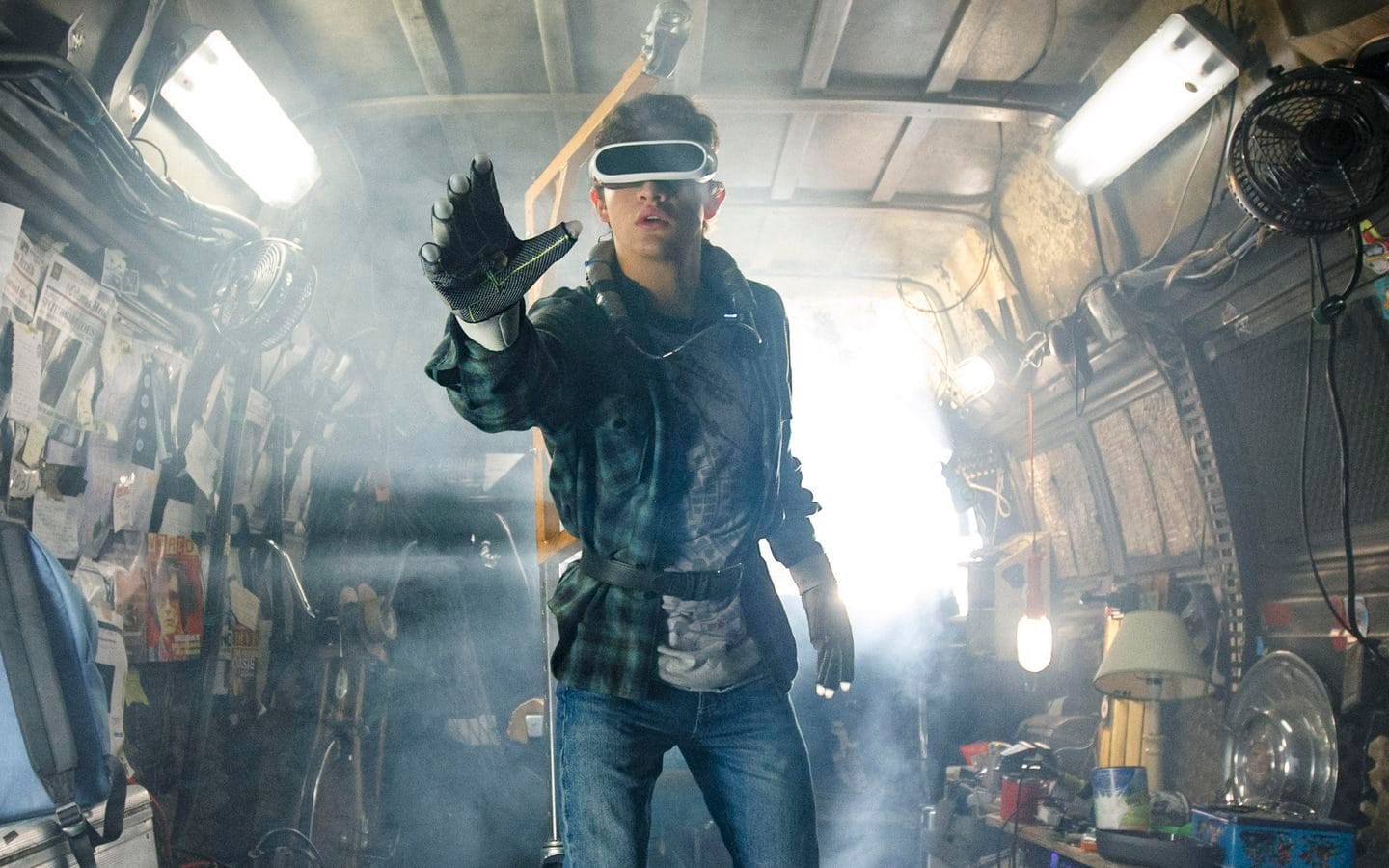
With The Post earlier this year garnering a wide flurry of Oscar nominations and a critical consensus which boarded on the side of rousing positivity, a return to form for director Steven Spielberg after the yawn-inducing mediocrity of The BFG was welcomed with open arms, and with only three months since its' release here in the UK, Spielberg returns once again to the movie-fold with Ready Player One, a cinematic adaptation of Ernest Cline's 2011 science fiction adventure novel of the same name. Projected in 3D for its' preview screening release, Spielberg's latest primarily focuses on Tye Sheridan's (X-Men: Apocalypse) Wade Watts, a slum-stricken teen who uses the environment of the OASIS, a virtual reality gaming platform created by Mark Rylance's (Dunkirk) recently deceased James Halliday, to both escape his daily slumber and more importantly, to join many others in the hunt for three "Easter Eggs" left within the game by Halliday before his death which give the finder both riches beyond belief and the key to control of the entire OASIS itself. With pop culture references galore and an upbeat, heroic sensibility, Spielberg's latest undeniably should work in the hands of a filmmaker renowned for popcorn delights, but with a brain scorching over-reliance on digital effects and a screenplay both absent of emotion and effective engagement, Ready Player One doesn't work as a whole and is merely saved by individual elements which make it passable rather than thoroughly entertaining. 


With an obvious social commentary regarding the nature and impact of modern technology, Spielberg's movie mixes the subversive ideas within Cronenberg's Existenz and Videodrome with a obvious love for the science fiction genre in its' eye-watering levels of on-screen references, levels which makes The Cabin in the Woods look like a passing fling with its' respective horror genre, but too a staggering amount which by the half-way point does become overly tacky and cheap. With an entire segment dedicated to Stanley Kubrick's The Shining, the set-piece is a real bottle spinner in regards to how one might respond, with my own personal obsession with Kubrick's masterpiece resulting in a subverted distaste to seeing our on-screen heroes quickly pop through the Overlook Hotel, music cues and all, and instead making me think how I would rather be watching The Shining instead. With Ready Player One a movie which Spielberg himself has coined as the most difficult movie he's worked on since Saving Private Ryan due to the staggering levels of visual effects, the CGI battle scenes really aren't worth the time, particularly in a final act which boarders on George Lucas style dullness and a complete lack of character engagement when at least eighty percent of the film is spent inside the OASIS itself with digitally designed "avatars". With Ben Mendelsohn once again resigned to Rogue One style typecasting as the film's one-note central antagonist and a ear-scraping level of exposition heavy dialogue, Ready Player One certainly has more negative aspects than positive, and for a director who time and time again has proven that giant gargantuan science fiction spectacle is part and parcel of his day job, Spielberg's latest annoyingly doesn't hit the heavy heights we are all very much used to.

Overall Score: 4/10

Sunday, 18 March 2018

Film Review: Tomb Raider

"You Messed With The Wrong Family..."


With Angelina Jolie and co. all the way back in 2001 showing how not to make a half decent video game adaptation with Lara Croft: Tomb Raider, a movie perhaps best remembered for featuring a pre-martini'd Daniel Craig in his youthful glory and the most annoying supporting character ever in the form of Noah Taylor's I.T addicted Brit, here we are seventeen years later bearing witness to yet another cinematic franchise reboot with Alicia Vikander (Ex Machina) taking over the reigns as the titular wall climbing heroine. Based upon the similarly titled 2013 video game from developers Square Enix, a game of which I can confess to playing from beginning to end and thoroughly enjoying, Tomb Raider, directed by Roar Uthaug (The Wave) follows the more robust and hunter-gatherer motif of the rebooted game series, utilising a much younger and innocent Croft as she develops her skills and understanding of the mystical forces of nature in a Casino Royale styled coming-of-age fashion, and whilst the movie does remain loyal to its' foundations with some interesting ideas and a dedicated leading lady, Uthaug's movie is still slightly under par of something which should have been much more entertaining. 


With Vikander adding a staggering amount of muscle in preparation for the role, her physical demeanour and willingness to at least look the part lands kudos points on her as an individual, and whilst the Swede is an undeniably likeable leading star, her approach to the role of Lara Croft is somewhat undermined by a screenplay which tends to verge on the edge of slumbering dullness, particularly in its' first half when we move from the urban wasteland of contemporary London through to the mysterious island of Yamatai via a stop-off in a thieve-ridden Hong Kong. Where the movie does eventually pick up the pace is in Croft's discovery of the island she so dearly seeks in order to answer questions regarding her father's disappearance, an area which formed the basis of the 2013 video game, and a location which introduces both Walton Goggins (The Hateful Eight) as the underwritten primary antagonist and Dominic West's (The Wire) hermit-esque and poorly wigged father figure whose narrative arc does seem relatively cliched. Concluding with a poorly managed "twist" which comes across as the definition of shark jumping, Tomb Raider is a somewhat mediocre blockbuster adventure and one which suffers primarily from a tendency for action over substance, but with Vikander an enjoyable leading presence with a kick-ass sensibility, the latest video game adaptation just about crosses the line. 

Overall Score: 5/10